This is a killer-cut off off THE KINKS ARE THE VILLAGE GREEN PRESERVATION SOCIETY.
This is a killer-cut off off THE KINKS ARE THE VILLAGE GREEN PRESERVATION SOCIETY.
On November 22, 1968 The Kinks released their sixth album THE KINKS ARE THE VILLAGE GREEN PRESERVATION SOCIETY (hence to be referred to as VILLAGE GREEN). Upon it’s release the album was branded a flop and the world moved on. But like a lot of great art, time has been kind to VILLAGE GREEN, and the album is now regarded as one of the band’s best efforts.

Not a bit of green on the sleeve, how odd.
And yet, even though the song is a bit ridiculous, to the extent that it seems to be a parody…in comes the chorus: “Preserving the old ways from being abused/Protecting the new ways for me and for you/What more can we do?” and I begin to wonder if perhaps Davies is only half poking fun. The answer can be found on the rest of the album, which is nearly 100% earnest in it’s assertion that the times are changing…and it kinda sucks.
Less about “green” spaces transforming into modern skyscrapers (though that’s in there too), VILLAGE GREEN is about how time and the change it brings effects one personal life. Ray Davies is a young-man beginning to realize he’s getting older. There are two themes of VILLAGE GREEN, both are very much intertwined. The first thing the album is about is time. The passage of time, the marking of time, the struggle against the change time brings, and finally the acceptance that one must grow older. The second theme of the album is photography, specifically as a reaction to time.
On a majority of the record the subject of photography/photos/taking pictures comes up. The question Davies seems to be asking throughout is: why do we take photographs? Is it because we love each other (like in “Picture Book” a song so pro-photograph it’s no wonder HP included it in a 2004 digital photography ad campaign) OR do we take photos for darker, more selfish reasons (like in the album closer “People Take Pictures of Each Other”)?
Davies and the rest of The Kinks seem to think it’s a little of both. “Picture Book” is a bouncy, glorious ode-of a song about looking back on one’s life via a big book of pictures. Though the chorus is a bit dark “pictures of each other/to prove we love each other,” the content of the photos described in the song are all seemingly random snapshots of our lives. It’s almost like photography as an extension of our memories. After all, if we don’t remember something, it’s like it never happened. And just like a picture of “a holiday in August/outside a bed and breakfast in sunny Southend,” our memories can be inexplicably random (why DO we remember the odd little things we remember?).
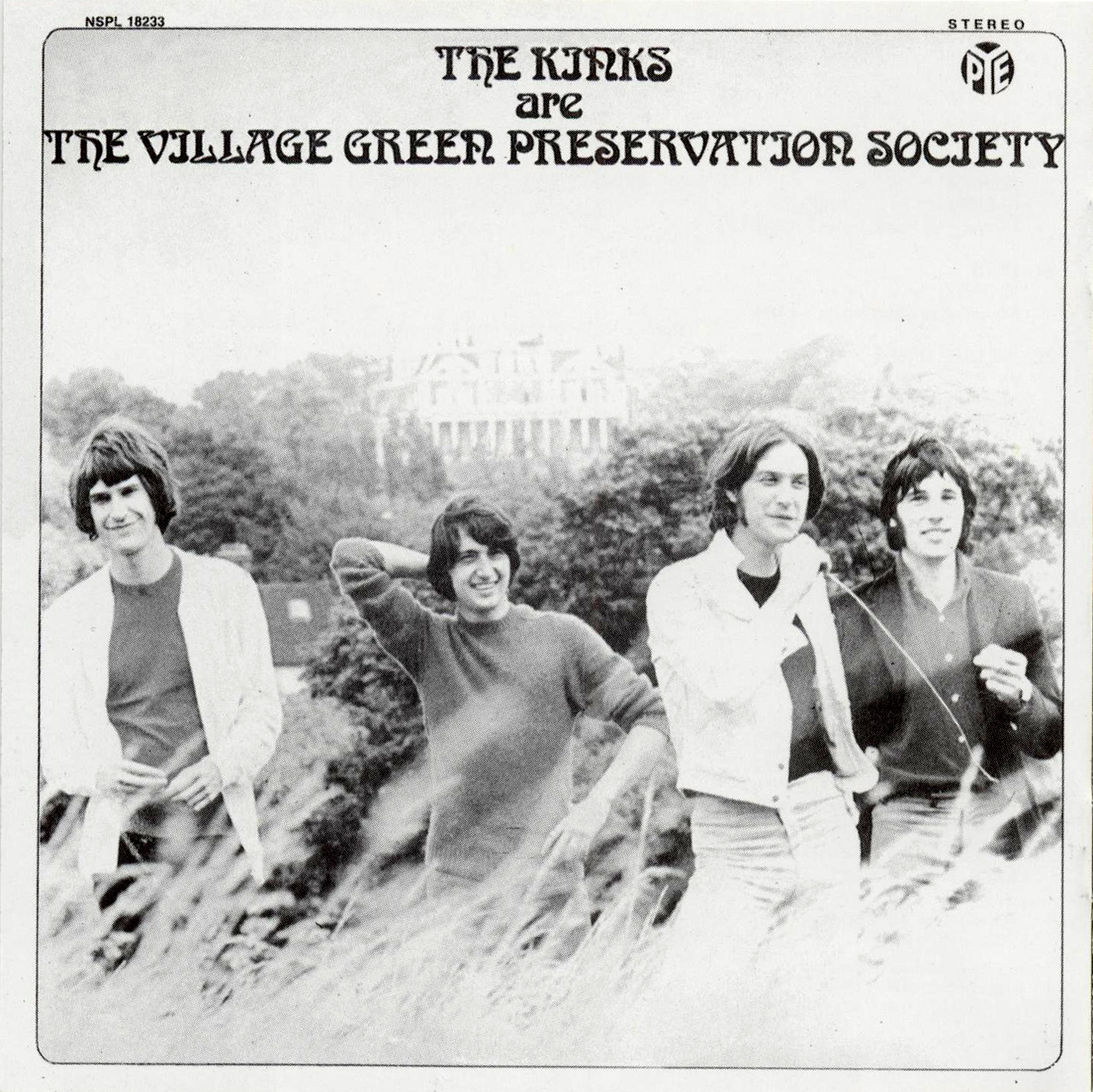
Again, not a bit of "green" on THE VILLAGE GREEN.
The darker side of photography, however, is found in “People Take Pictures of Each Other” (which actually seems like it should be the title of the more well known “Picture Book”). The song has a soft, French-like quality about it. Davies sings about how “People take pictures of the Summer/Just in case someone thought they had missed it/Just to proved that it really existed.” Which leads us to a world or mindset where, it’s not a question of “if you don’t remember it, it didn’t happen” but rather, to a place where “if you have no photographic proof of it…it didn’t happen.” I find that many people in my generation and beyond are obsessed with photos, so much so that many people (parents at a dance recital) agonize so much over the photos that they miss the actual moment. The song also touches on the albums other theme, of time when later one Davies sings: “You can’t picture love that you took from me/When we were young and the world was free/Pictures of things as they used to be/Don’t show me no more, please.” That’s a bold, and frankly powerful lyric…and really encapsulates the complexity of VILLAGE GREEN. The album goes from “Picture Book,” a love letter to photographs…and ends thirteen songs later with the exclamation “show me no more, please.”
That’s why this record is so fucking great. It’s this giant, complex mediation of life and death, disguised as a pop record.
“Do You Remember Walter?” has nothing to do with photos, but it’s a central track to the record. Whereas “The Village Green Preservation Society” is all about trying to hold onto the past, “Do You Remember Walter?” is a frighteningly realistic look at how that fight ALWAYS ends. The song is one man’s recollection of his old school chum, Walter. Walter and the song’s narrator were once young and idealistic–they were going to “fight the world and be free,” with the goal of saving their money and buying a ship to sail the world! Now he’s married and fat, in bed by 8:30. He’s not the cool guy that smoked and drank, and had a bunch of fun with his “mates.” Now he’s this empty shell of the free-spirited kid he once was. And, as the narrator laments, “Walter, you are just an echo of a world I knew so long ago/If you saw me now you wouldn’t even know my name.” This suggests to me, that the narrator–like Walter, lost that battle against time. There is a brief respite from the gloom, tucked away at the end of “Do You Remember Walter?” when Davies sings: “And if I talked about the old times you’d get bored and you ll have nothing more to say/Yes people often change, but memories of people can remain.” Which, in a way, reflects on the albums other theme of photography, in that like our memories, photos can preserve events AND people in the past forever. So Walter is gone, but never forgotten.
A bit of hope.
“Village Green” is a slower song, one that’s essentially a list of all thing country things that the narrator/Davies misses about pastoral Brittan. It’s a good song, notable for mentioning the titular green-space AND also referencing photographs: “American tourists flock to see the village green/They snap their photographs and say gawd darn it/Isn’t it a pretty scene?”
The Kinks ape The Yardbirds on “The Last of the Steam-Powered Trains” which shares many thematic similarities to “Do You Remember Walter?” It’s a bluesy-harmonica fueled stomp that finds Davies proclaiming that he is the last “of the good, old fashioned, steam-powered trains.” This of course, is used as a metaphor for Davies/the narrator’s staunch stand against the endless parade of time: “I’m the last of the good old renegades/All my friends are all middle class and grey/But I live in a museum, so I’m okay.” It’s about trains, but it’s also about being that last holdout against growing up and adult responsibilities.
But it’s not all heavy on VILLAGE GREEN. The album has fifteen tracks, and some have very little to do with any larger theme (except in the most abstract sense). Of these, I enjoy the vaudevillian “Sitting By the Riverside.” With it’s heavy use of keyboard (there’s a great freak-out moment mid-way the song, when the keyboard reaches this climax…this thunderous peak, then crashes and the vocals kick back in, it’s fucking great) and laid-back vocal harmonies, this song reminds me of the Beatles-throwback songs like “Your Mother Should Know” or “When I’m Sixty-Four,” in that it’s a rock band playing a song in a style their parents would have liked. I always find those kind of songs fascinating.
Another non-theme related song I find really interesting is “Big Sky.” “Big Sky” is a trippy, near-psychedelic song–that’s nearly spoken-word. Davies croons and wails about all the injustice/terrible things that the song’s “character” the sky (Big Sky) looks down upon…and shrugs. He shrugs because he’s, well because he’s just so gosh darn big, and our problems are just so small. Is Big Sky God? Does God, like Big Sky, see our problems and find him/her/itself too powerful or mighty to help? Or is Davies being a bit sarcastic, is Big Sky not really overwhelmed but rather complacent?
“People lift up their hands and they look up to the big sky/But big sky is too big to sympathize/Big Sky’s too occupied/Though he would like to try/And he feels bad inside/Big sky’s too big to cry.”
What is Big Sky “too occupied” doing? Is he too busy staring down at our suffering to do anything about it? Maybe God’s hypnotized in such a manner, maybe that’s why we have war and disease and suffering. Then again, isn’t that what we all do? Don’t we as people look at other suffering and throw our hands up and say “I’m too busy to help!” What are we too busy doing? If The Kink’s “Big Sky” is God, then we were certainly made in his/her/it’s image.
From contemplating such large, theological questions, The Kinks switch over to the “Star-fucker” phenomenon on the song “Starstruck.” Which of course is about a girl who runs around, going nuts because she’s starstruck. Other album oddities include a song about fat cat (“Phenomenal Cat”), and an Orwellian-ode to Animal control of the world (“Animal Farm”). All three of these tracks make fantastic use of the mellotron–which allowed the band to simulate woodwind instruments (though they sounded pretty real to me).
I’ve probably over-thought this record. I know I’m misrepresenting it–it’s not a dodgy, stuffy old record with a lot of things to “say.” VILLAGE GREEN is just a rich, detailed, thought-provoking piece of art that, like a good painting or film–can stimulate the mind and, if you chose…give you something to think about.
Or you can hum along with it. It’s full of wonderful, beautiful hooks. VILLAGE GREEN is a very literate, yet very lively rock record. And we all know how few of THOSE are being made today. What do I have to do, put it in your hands? Go. Get it. Listen.
Prologue: Genre Sucks
Genre is pretty stupid thing if you think about it. Trying to categorize music (or any art for that matter) into a neat little box is often an exercise in futility. I think a lot of critics and fans alike miss the point when they try to put singers or bands into one specific category. Worse still, people put themselves into a “genre,” telling themselves they only like one specific type of music.
My iTunes does not display “genres,” I switched them off because the iTunes database is ridiculously loaded with so many stupid (and hopelessly redundant) categories. The worst is offender being Alternative Rock which gets tagged as “Alternative,” “Alternative Rock,” “Alternative and Punk,” “Punk and Rock,” “Punk Rock” and so on and so forth. If, like me, you’ve give up on genre and all the stupid baggage that goes along with it, you’ll find yourself descending into the rabbit hole of awesome music.
Case in point: I used to be a “no rap or country” guy until I realized how foolish and narrow-minded such a worldview was. For one thing, rock music (which I love) has it’s roots firmly planted in country music–so much so that to deny a love of country would be hypocritical. Rap music, on the other hand, is probably the only culturally relevant art form going right now, not like rap or denying it credibility would like people in the 1950’s ignoring TV. I mean, to do so (and many did) meant they missed an incredible cultural shift.
* * *
Part I: Space Cowboys
But enough philosophizing, this post is called “Space Cowboys” because Keith Richards got me to listen to some damn fine music. I read his epic tome LIFE when it came out, and one of the most interesting bits was his relationship with Gram Parsons. Parsons was Richards brother-in-arms during the late 1960’s. Whereas Richards came from the RnB/blues school, Parsons came from more of a country background. Their friendship was pretty interesting and profound (influencing both Parsons and The Stones). Keith liked Gram so much he let Gram record one of his greatest songs first (he let him record “Wild Horses” first, if handing someone your greatest masterpiece isn’t bro-love, I don’t know what is). In a way they became almost mirror images of each other, until Parsons tragically died of a drug overdose. Anyway, Richards got me interested in his friend Gram (he spoke so highly of him) so I started digging around in his music.
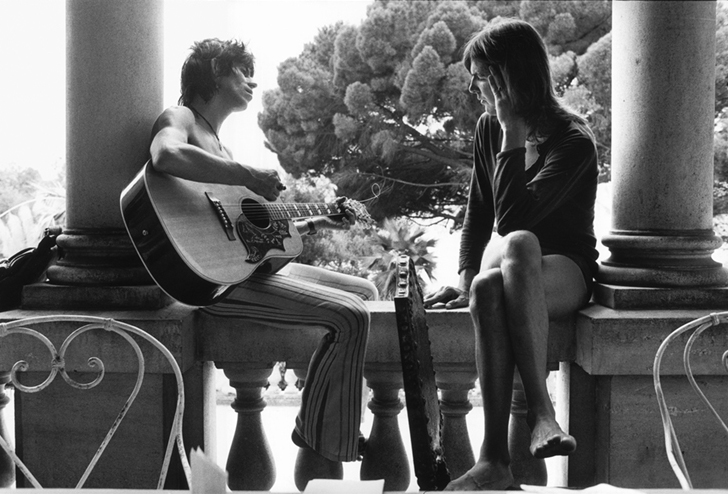
Gram + Keef = BBF's 4 Eva
Turns out Gram Parsons pretty much invented Wilco. Well, to be precise, he invited “Alt-Country” or whatever the hell the dipshits at Pitchfork.com are calling the music being created today that strattles the line between alternative rock and country music (drat! foiled again by descriptions of genre). In 1969 he put out the first country-rock album…ever with his band The International Submarine Band. After that he joined the floundering Byrds and convinced them to put out a country record (!). That album, SWEETHEART OF THE RODEO, shouldn’t have surprised people (is there really much distance between folk and country?) but it kinda did. It kinda blew everybody’s mind, and thanks to Parsons, the band put out one of their best records. And all he did was rather than having the band make music influenced by country, Parsons had the Byrds doing country music. The stylistic jumble was basically country music, but not quite. Thus a genre was born.
But Parsons was a maverick and was soon out of The Byrds and forming The Flying Burrito Brothers. I know what you’re thinking–incredibly stupid name, but I was blown away by this band. 1969 was a strange time, and the combination of psychedelic rock merged with country music bred a new kind of cowboy: the Space Cowboys. These brave men were schooled in the popular Top 40 rock of the day but loved classic country music. From these intrepid “astronauts” bands like Wilco, Old 97’s, The Jayhawks, The Wallflowers…hell even REM came into being.

Flying Burrito Brothers, not known for their fashion sense.
The first two Flying Burrito Brothers records, THE GILDED PALACE OF SIN and BURRITO DELUX, are two fantastic records from end to end. Songs like “Wheels” exist somewhere in between psychedelic rock and country–in a place that I never knew existed (or was quite frankly, so fucking exquisite). At first I found myself pulling away from the “country” aspects of Parsons creations and only admiring their “rock” elements. But after awhile my prejudices/hangups fell by the wayside (mostly because “Sin City” is fucking righteous song) and I found myself enjoying music I would have otherwise dismissed outright.
* * *
Part II: What does it all Mean?
Delving deeper into this exciting genre of “Space Cowboys,” I happened upon a band with an even stranger name than The Flying Burrito Brothers (if you can believe that): The New Riders of The Purple Sage. With a name like that, I’m sure you won’t be too terribly shocked when I tell you that famous Dead-Head Jerry Garcia was a member of the band. More than just a “country side-project,” The New Riders are a ridiculously awesome hybrid of rock and country. Taking the next logical step from The Grateful Dead’s AMERICAN BEAUTY album, THE NEW RIDERS OF THE PURPLE SAGE turns down the stoner-folk and turns up the country. Both the Parsons albums and The New Riders could be classified as straight “country” or straight “folk” or straight “rock.” That they could also be (and are) part of a new hybrid of existing genres should speak volumes for how awesome this music is. That this movement of “Space Cowboys” happened at the end of the 1960’s/early 1970’s was no accident. The 1970’s saw an explosion of country influenced rock (and vice versa rock influenced country). Hell, the era’s biggest, most successful band, The Eagles (also known as “the fuckin’ Eagles, man”) was a country-infused rock band.
So what does all this mean? Well I think it’s important to realize that some really awesome stuff happens “in between” the boring, staid genres. It’s like tectonic plates bumping and colliding, forming mountains–the best shit tends of happen at the spots where genres collide. I’ve grown as a music fan/aficionado and now, instead of staring blankly into the middle of a particular genre (even if it’s one I love, like rock) I know go out of my way to explore the fringes of all the genres. After all, today’s “cowboys” living on the fringe of art often become the next generations mainstream heroes (Wilco).
I really liked Sleigh Bells debut album TREATS because it was the right amount of cute and vicious. It was precious cheerleading music with a punk edge. I saw Sleigh Bells, which is not a “band” but guy and girl from New York, and was pretty underwhelmed by their live performance. Was Sleigh Bells a one-off novelty? Did TREATS represent a tip with no submerged iceberg? I was skeptical when I found out the band was putting out a second record—but it turns out that skepticism was unfounded.
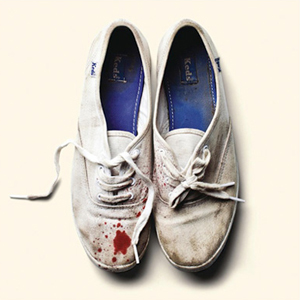
Sleigh Bells gonna get plenty of shoe money with this record.
REIGN OF TERROR picks up right where TREATS left off. The album opens with “True Shred Guitar” a raucous, rowdy track that features a badass guitar-lick with a clap-your-hands/stomp your feet beat. “Born To Lose,” the second track, features the sweet cheerleader-squad shouts mixed with horribly dark lyrics. So far everything on REIGN OF TERROR could have been on TREATS without raising any eyebrows. But then comes “End of the Line” and you see the evolution. The song is a fantastic bit of pop. Gone is the brash, rowdy rock. And while REIGN OF TERROR certainly rocks, I’d say that for the most part this is Sleigh Bells pop record. From the hypnotic splendor of the 80’s tinged “You Lost Me” to the bitter-spiraling of “Road to Hell” REIGN OF TERROR adds an extra dimension, sonically, to the band.
Think of it like a 3-D film conversion—this is the same Sleigh Bells but with extra depth. Sure, it’s still the simple boy-girl-guitar-drum machine/sample loops but there’s a heightened awareness and a finer touch to the proceedings. Many bands have stumbled on their release, that Sleigh Bells have avoided this is a minor miracle—that the band has topped TREATS on every single level is the real victory. With REIGN OF TERROR, Sleigh Bells has proven to me that they’re not a novelty one-hit wonder, their seriously talented and determined to stick around.
There’s nothing I like better than being surprised by something that’s really good: REIGN OF TERROR is really good. I know it’s early, but this is already on list of top albums of 2012.
REIGN OF TERROR gets a straight “A.”
Alice Cooper made “sick in the head” an art form. Before Marilyn Manson, before rap music was making parents shit themselves…there was Alice. A lot of people plop Cooper into the same category as Ozzy–bumbling, brutish, pseudo-satanic weirdos. But Cooper is much more than that, he’s more dangerous than Ozzy, because unlike the “Oz-man,” Cooper is actually very well-read, smart, and witty.

Snakeskin...dollar babies...
I know, some of you reading this will think I’m crazy. Maybe you’ll think I’m being overly generous, but listening to BILLION DOLLAR BABIES, Alice Cooper’s fifth (and greatest) album–I had to look some stuff up. For instance, do you know who Saint Vitus is? I didn’t either, but Cooper makes a passing reference to him in “Unfinished Sweets,” the album’s fifth track. I had to look it up. Turns out Vitus was this dude who is supposed to have driven a demon from this Roman Emperor’s son. He was drove the demon away and was killed (because he wouldn’t renounce his Christianity). Before performing this task (and then being rewarded with death) Vitus is said to have been tortured by his father (who was a Roman Senator and wasn’t cool with his son’s religious views).
Or something like that. The point is, Cooper put this strange, educated reference into a song about being tortured in a dentist’s chair.
Alice Cooper’s popularity was at an all time high in 1973. The band’s last album SCHOOL’S OUT, had been the band’s biggest hit and catapulted them into the ranks of rock glory. BILLION DOLLAR BABIES was the follow-up record, and proved to be more popular than SCHOOL’S OUT, spawning four hit singles.
While not quite metal, Cooper walked a thin line between hard-rock and mainstream rock ‘n roll on BILLION DOLLAR BABIES. The songs are darker sounding, the guitars are heavier than what most people think of as typical 70’s rock. But beyond being “heavy” or just being loud…Cooper was very theatrical. There is this sinister, “evil-carnival” type vibe flowing throughout the album. I’ll admit, some of it is ridiculous. Some of it is even pretty damn stupid. But most of it is kinda awesome, like one of those cheesy black-and-white rubber monster movies. BILLION DOLLAR BABIES works because Cooper is smirking through the coarse growls and dark ambiance.
Let’s talk first, though about the track that most disturbed me: “Mary-Ann.” This song is a freakishly-normal sounding love song. It comes in near the end of the record, just after the absurdly dark/satanic-ish “Sick Things” (which I’ll get to). “Mary-Ann” is a breath of seemingly-fresh air. Think 1930’s piano ballad or early Elton John. But somewhere, something goes wrong and the about half-way through the song (after going on and on about how much he loves his girl Mary-Ann), Cooper wails: “Mary-Ann…I thought you were my man!” The first few times I listened to the song, I totally missed this. Before your brain can make sense of this bizarre phrasing (or is it a revelation?) the song degrades into a funky-fucked up piano solo that starts sweetly in heaven before dropping back down to Earth (where is stutters and dies).
It’s a short, two minute song…but it freaks the hell out of you at three AM…when you’re wearing headphones and the lights are out. That’s the power of Cooper–he can make the most innocent thing strange and sorta creepy/terrifying. And yet, at the same time he can take something godawful, something repugnant…like say, necrophilia and make it happy and sunny like on “I Love the Dead.” This song, which is both unabashedly about violating corpses (and yet very innocent for the most part, lyrically) is also very up-beat sounding. There’s a strange, explosive sing-a-long quality to “I Love the Dead” that makes you…smile. It’s damn near a Beatles song at the end, it’s so fucking sunny. And yet, it’s about fucking someones dead loved one: “While friends and lovers mourn your silly grave/I have other uses for you, Darling.” There’s a beautiful horn and string arrangement at the end (there’s also a sick groaning sound, too). I know, intellectually, I should find this song horrid…but I love it. That, too, is the power of Cooper.
BILLION DOLLAR BABIES opens with “Hello Horray!” which pretty much sets the scene for the entire forty minutes of the album. The song is the declaration of a mad carnival barker, the loudmouth announcer who’s preparing himself as much as he is his captive audience (“I’ve been waiting so long for this thing to come/Yeah-I’ve been thinking so long I was the only one”). “Hello Horray!” also mentions the “American Dream” which is a theme that Cooper seems preoccupied with at various times throughout the album (most notably “Elected” which I’ll attend to in a moment). It’s as though “Hello Horray!” is a kind of cry to everyone–including the disenfranchised (youth) of America. Cooper’s swagger, his affirmation that “God, I’m so strong” at the end of the song appears to be brash arrogance…but by the end of BILLION DOLLAR BABIES you realize it’s not arrogance, it’s a natural fact.
I haven’t talked much about the music of this album–BILLION DOLLAR BABIES is very much a “guitar” album. There is some killer guitar work on this record. The title track “Billion Dollar Babies” (which yes, was in GUITAR HERO 2) is the most technically impressive track on the record, but the album abounds with awesome (and catchy) guitar licks. Cooper’s band is not big on the guitar solo (which was HUGE in the 1970s), expect on “Billion Dollar Babies” which is like 80% solo.
“Billion Dollar Babies” is a fucking fantastic song. Again, it’s not so much anyone thing that makes this song so creepy–it’s everything added up. First off, there’ s the creepy lyrics. I have no idea what this song is about (Cooper makes another reference to the “billion dollar babies” in a later track, “Generation Landslide”) but the lyrics are all “attics” and “moonlight.” There are some weird images too, like “Rubber little lady, slicker than a weasel.” Uh, okay. The song is supposed to be about the dangers of over-indulgence…but I don’t see it.
But anyway, back to it being creepy.
“Billion Dollar Babies” is also so strange because it’s a duet–between Alice and Donovan (yes, the dude that sang “Mellow Yellow” and “Sunshine Superman”). Donovan’s sweet, angelic voice combined with Cooper’s creepy growl makes for an unusual pairing…that both delights and unnerves. This mixed with a blistering guitar tone, makes “Billion Dollar Babies” truly awesome…and really messed up. It’s one of those things that must be heard to be understood.
“Elected” is Cooper at his most satirical, taking a stab at both vanity and the American political machine. This song sounds like a strange-hybrid of the Rolling Stones “Sympathy for the Devil” and The Ramones “I Wanna Be Sedated.” There’s a brilliant, chugging guitar lick that pervades the song (along with Cooper’s trademark howl). Supposedly, this song is a reworking of an older song “Reflected” (but as I am unfamiliar with this song, I cannot comment directly on this). What I can say is that the song is, in the words of my uncle “the perfect November song.” Though he never says “president” in the song, it’s inferred that Cooper is demanding that he be elected Commander-in-Chief. It’s surreal to hear a man how sings about corpses croon that he wants to be elected President. Once again, like on “Hello Hooray!” Cooper seems to be reaching out for that all-important disenfranchised youth rock-demographic. He calls out that “Kids need a savior, don’t need a fake” and that “I never lied to you, I’ve always been cool.”
Indeed.
My personal favorite off BILLION DOLLAR BABIES is probably the record’s most famous single, “No More Mr. Nice Guy.” First off, this song has an awesome Stone-ish vibe right at the beginning. It’s instantly recognizable, and awesome. “No More Mr. Nice Guy” is a great satirical stab at Cooper’s own infamy. I love all the crazy, outlandish things that happen to him because people think “he’s sick, he’s obscene.” Like the reverend punching him on the nose in Church. Or how his own dog turned on him (and bit him in the leg). Not to mention how his parents have been effected (his dad’s in hiding and his mom was kicked out of the “society circle”). Awesome chorus. Awesome chorus. This song is catchy and insane (and I love the fact that he’s only now bad because the world has made him that way). “No More Mr. Nice Guy” is fantastic and definitely on the best songs Alice Cooper ever recorded.
Speaking of catchy, “Generation Landslide” is super-catchy. The song, which as mentioned before is the second on the album to mention “billion dollar babies” is about spoiled rich kids. The song is also noteworthy of the guitar solo at the end (which as mentioned before are kinda rare on the album). The album’s other two tracks, “Raped and Freezing” and “Sick Things” are both two differing examples of Cooper’s bizarre songwriting. “Raped and Freezing” is a more traditional rock-story-song about a role-reversals (Cooper’s narrator-character ends up getting raped and left “naked, stranded in Chihuahua.” Meanwhile, “Sick Things” is a strange near-spoken-word song that’s really freaky…and is apparently, about…sick…things??? I haven’t a clue. Honestly, I think this song is a bit of a turkey.
But hey, nine out of ten ain’t bad. That’s a 90% (which is an A-). So Cooper makes the grade.
One final note, about “Alice Cooper” vs. “The Alice Cooper Band.” You may have noticed that earlier in this essay, I referred to this album’s artist in both the singular and the plural near the beginning. The reason for this is because, in the beginning, Alice Cooper was the band’s name (and not just it’s lead singer’s stage name). BILLION DOLLAR BABIES is the final album of Alice Cooper THE BAND (as it was originally formed). Alice Cooper the man went on to make a bunch of records, but not with the same backing band.
Just thought I should clear that up. As a youngster I was often confused when I heard people say “Alice Cooper were great” or “I like The Alice Cooper Band.” Both of these things sound weird (especially coming from the mouth of a drunk person) but actually make sense when you are aware that…oh, never mind…you get it…
So, what does it all mean? Well, bottom line: BILLION DOLLAR BABIES is an interesting romp through the strange, dark, wilderness of rock. It’s a fantastic October album (though it is a good November album, too) because it’s plenty spooky. BILLION DOLLAR BABIES is also an interesting historical piece. It’s funny to listen to it because, compared to much of what I hear–it’s actually very tame. Unlike the “dumb” wrap that most music like this gets, Alice Cooper (the man and the band) are pretty clever and merge rock with the theatrical unlike any band this side of Queen.
BILLION DOLLAR BABIES is essential rock. Period.
In honor of the new Sleigh Bells album, REIGN OF TERROR, I took a Facebook poll asking fans of Defending Axl Rose to vote for their favorite 2-member rock band. I’ve always had a soft spot for 2-member rock bands that are able to sound like regular full-sized bands.
Anyway, below are the results which are SHOCKING and as always…highly unscientific.
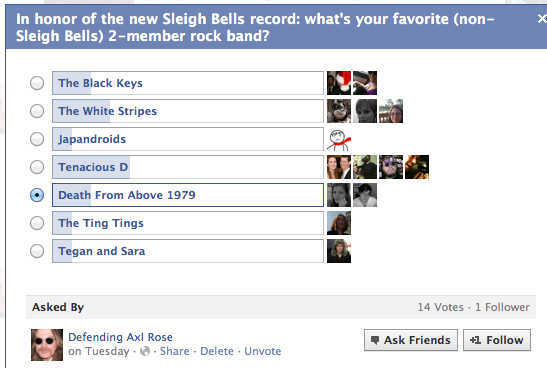
5, 6, & 7. (3-way Tie): The Ting Tings, Japandroids, and Tegan & Sara: This one bums me out the most, because I think Tegan & Sara are amazing. They’ve put out more records than the Ting Tings and should not have tied with them. I never got around to hearing the second Ting Tings album (did it ever come out? I’m too lazy to Google this) but their first record was catchy enough. I saw ‘em live and they were okay. Kinda the reverse of The White Stripes with the dude on drums. Actually, the drummer for The Ting Tings was pretty badass, playing both a guitar and the drums at the same time. Still, Tegan & Sara should have been ranked higher.
Canadian indie rockers Japandroids also tied for last place, which is a little less-surprising as they were the most low-profile band in the poll. I really dig their crunchy garage rock sound and I gotta agree with the person who voted for them: “Heart Sweats” of POST-NOTHING is about as awesome as awesome gets.
4. & 3. (2-way Tie): The Black Keys and Death From Above 1979: I’m super-biased here because I actually voted for Death From Above 1979. I am surprised to see that The Black Keys didn’t do better as they’ve got a lot of heat right now. I dig their down-and-dirty blues rock swagger—but I think that personally they’re assholes (go read any interview the band has ever given).
While Death From Above 1979 only put out one album (well, they also released a second album that was a remix of the first one, but who counts that shit?) but they made a big impression on me. DFA1979 sounds like way more than two dudes. They’re noise-rock at it’s finest and super-underrated. Go listen to “Romantic Rights” or “Black History Month” it’ll knock your socks off. Two people? Woah.
2. The White Stripes: What the hell happened here? I pretty much came up with this question with Jack and Meg in mind. When I think of 2-piece rock bands, The White Stripes are THE first band I think of. What’s worse about this is the band they lost to (more on that later) not to mention that one of my friends (who voted for Tegan & Sara) went out of her way to inform me that The White Stripes are just as crappy as “Don’t Wanna Miss A Thing” by Aerosmith. That’s just disappointing.
Even if you ignore the fact that Jack White is this generation’s greatest songwriter (and a helluva guitar player), The White Stripes should still be #1 for their ability to sound like an entire 7 Nation Army when they play.
1. Tenacious D: I guess I shouldn’t be surprised that The “D” came out on top in this poll. After all, all my friends are stoners…just kidding. Tenacious D is a pretty sweet band, although they get a LOT of help from really famous rock/metal musicians, so I’m not sure if it’s 100% fair to give them the crown in the “Best 2-Piece Rock Band” category. That said, Jack and Kyle have done a lot of good for rock music, acting as metal-ambassadors to the world.

We fucking win!!!
Do you disagree with these findings? Then head on over to Facebook and “Like” Defending Axl Rose, then the next time I have a Highly-Unscientific Rock Poll you can add your two-cents.
For such a mega-successful band, U2 has had a shockingly uneven quality in their albums. In fact, I would go so far as to say that of all the mainstream rock acts of the last 25 years, their release record is the most checkered. When U2 is good, they’re fantastic. But when U2 goes off the deep-end, they crash and burn spectacularly. Bono has said in interviews that had 2000’s ALL THAT YOU CAN’T LEAVE BEHIND not been a commercial success, the plan was for U2 to break-up. Feeling a little starved for success after spending the 1990’s experimenting, U2 stripped down their sound and went back to basics. The move paid off big time, but it came at a price. The band’s ATYCLB follow up, HOW TO DISMANTLE AN ATOMIC BOMB, was a pretty much a rehash of what they’d done before. So much so that I’d say that the album should have been called ALL THAT YOU CAN’T LEAVE BEHIND Part II.
 But a confident U2 is an experimental U2, and as such, NO LINE ON THE HORIZON finds the band sliding back into something a bit more interesting.
The album opens with “No Line on the Horizon,” which flirts between being spacey and down-to-earth. Bono’s voice seems to be getting better with age; it’s as vibrant and strong as it was back in the 80’s. One of my favorite tracks, “Magnificent,” blends early 90’s electronica-U2 with the more restrained rock elements that made U2 famous. The song’s main guitar riff is memorable but not overwhelming. I think that behind George Harrison, The Edge is probably one of the most understated guitarists off all time. The Edge’s riffs can be bombastic but on NO LINE ON THE HORIZON he seems content to hang back and noodle on the peripherals of the songs, taking center stage only a few times. When he does it’s incredible (see the end of “Breathe”).
Like all modern mainstream rock records, NO LINE ON THE HORIZON opens strong and reaches it’s peak at the mid-point with the twin singles “I’ll Go Crazy If I Don’t Go Crazy Tonight” and “Get On Your Boots.” The later being the freakiest thing on record, as well as the catchiest. “I’ll Go Crazy” is a decent song but of the two singles, “Get On Your Boots” is the more interesting. To be honest, “I’ll Go Crazy” seems like a leftover from ALL THAT YOU CAN’T LEAVE BEHIND. That’s not a bad thing, it’s just not very memorable.
The last half of the album is a more subdue affair, but it’s also where the best tracks are hidden. In fact, I would say that the last two tracks “Breathe” and “Cedars of Lebanon” are probably my favorites on the entire album. “Breathe” especially evokes the fire and spirit of the classics found on THE JOSHUA TREE. Near the end there’s a fantastic cello-solo that leads right into the best Edge guitar solo I’ve ever heard, it’s so warm and lovely that you can almost hear the cracking as the ice finally melts off his guitar. The song almost seems like an answer to the critics who say The Edge is all technique and no heart.
NO LINE ON THE HORIZON does have a few duds, the worst being “Unknown Caller.” The song uses modern technology as a metaphor and listening to Bono croon about “ATM Machines,” “rebooting,” and “having no signal” (as in cellphone signal) is pretty cringe-worthy. It’s almost like hearing your grandparent talk about “The Facebook,” it comes off as forced and makes U2 seems shockingly un-hip (even the song title is ridiculous in today’s world of caller-ID). I found “White As Snow” to be dull and overly sentimental, while “Fez-Being Born” was just downright boring to sit thorough, coming in just a little over five minutes in length.
Overall though, NO LINE ON THE HORZION is a good album and I’m glad I made the effort to dust it off and give it another chance. I don’t think it’s strong enough to convert anyone who’s not already a fan, but I think it’s got enough strong tracks to merit a listen. I’m going to chalk up my initial reaction to this record to my health issues I was dealing with back in 2009. There’s been a couple times I’ve gone back and listened to something that had underwhelmed me initially and been pleasantly surprised. I think we bring more of our baggage to art than we realize. Obviously hearing problems are going to affect one’s opinion of a new CD, but there was more than that going on. NO LINE ON THE HORIZON didn’t change, I did. My life has completely changed since 2009: my relationships, my job, where I live. I don’t think NO LINE ON THE HORIZON is a landmark record in terms of the “musical world” but I do think it’s important in my life. I think revisiting albums at different points in life are key to understanding both them and ourselves.
NO LINE ON THE HORIZON gets a (belated) “B+”
This is story about inexplicably losing something very precious and then inexplicably getting it back. The year was 2009 and my life wasn’t really going the way I’d wanted it to go. I was stuck in a really bad job, the kind of job that was soul crushing and hazardous to your health. I was working in a really dirty environment—there was a lot of dirt, dust, and wood particulate in the air I was breathing and I developed allergies. One morning I woke up and discovered, to my horror, that I had diminished hearing in my right ear.
Before jumping to any conclusions, I decided to try cleaning my ear out. So I used an over-the-counter-ear-douche-thingy and proceeded to mindlessly clean my ear. In the meantime, I lived a strange sort of half-life. I wasn’t able to enjoy many of the things I normally loved. Not only was it frustrating to not be able to hear songs, television, and phone calls—but having trouble hearing these things also served as an unpleasant reminder that something was wrong with me.
When the problem didn’t sort itself out and go away, like I’d hoped it would, I decided to break down and see a doctor. After a quick check of my ear, which I was told were immaculately clean after my many ear-douchings, I was told that it was probably just my clogged sinuses. I was given some medicine and within a few weeks I was mostly all better. I still occasionally have hearing issues in my right ear, especially during “allergy season” which is pretty much all the time in my part of the country. But it could be worse; my flirtation with deafness could have been permanent. As a music nerd and rock geek, I can’t imagine a life without music.

When my ear was really bad, U2’s album NO LINE ON THE HORIZON came out. Despite my diminished hearing, I went out and bought the album. I popped it into the CD player of my car and struggled to get into the songs, but I wasn’t in the mood and I couldn’t really enjoy it. Later on, when my hearing problems pretty much went away, I heard a few of the songs—mostly used in advertising. I didn’t think they were horrible, but I didn’t have much enthusiasm for listening to the album. I tossed NO LINE ON THE HORIZION aside and life moved on.
I got to thinking about all of this because I bought a new computer at the end of last year and I’m in the process of putting all my music into my new computer’s library. I’ve been doing it slowly, piece-by-piece. At first I thought I wasn’t going to try and replicate my old iTunes library, but I’m pretty moody when it comes to music. Albums and songs I didn’t miss or need last week are suddenly giant, embarrassing holes in my computer’s collection. So I said “the hell with it” and have started piling it all onto my hard drive—and during the project I happened upon NO LINE ON THE HORIZON. I still have it, because years ago I forever gave up on the notion of selling my CD’s.
Once, during a very dark period of my life, I was unemployed and forced to liquidate a rather substantial portion of my CD collection. I only sold things that I was certain I would never miss, but alas, I’ve spent the better part of a decade re-buying many classic, essential albums. Of course, I didn’t re-purchase that Shaggy album and a few other dodgy musical choices I’d made in my youth.
Between the years of 2001 and 2007 U2 was a very big influence on me. Prior to that time I’d had THE JOSHUA TREE for many years but was otherwise a pretty casual fan. But their surprising return-to-form on 2000’s ALL THAT YOU CAN’T LEAVE BEHIND really made me a U2 fan. That album and those songs were everywhere in late 2000 and early 2001. I saw the band perform in November of 2001, and to this day it’s one of the best large-arena rock shows I’ve ever attended. Bono and the band were a soothing, positive influence during a really scary time. The 9/11 attacks in New York and my newly acquired draft card weighed heavily on my mind, and U2’s music helped calm me down and put things into the proper perspective.
I was so inspired by the band, and Bono’s philanthropy, that I joined Amnesty International after spotting the organization’s name in the liner notes for ALL THAT YOU CAN’T LEAVE BEHIND. I also dove back into U2’s back catalogue and became an even greater admirer. Of course, doing this put the band’s next album, HOW TO DISMANTLE AN ATOMIC BOMB, into greater perspective. Still, though the band’s previous output might have put their new music to shame, it was better than most what was being played on the radio.
My super-fandom of U2 ended around the time I moved out of my parent’s house and went to college. U2 was replaced by newer bands, most of whom I will admit have very little to say. Or have very little they’re willing to do to help make the world a better place, which is one thing U2 can never be faulted for doing. I think we grew apart, like high school sweethearts who mature in opposite directions. I quit Amnesty International after I heard one of their mouthpieces say some foolish things on CNN. I rejected a lot of classic rocks bands I’d loved when I was growing up.
I was willing to give U2 my time and money when NO LINE ON THE HORIZON was released, however I think the purchase was mostly made to honor a band I’d once loved very dearly. The bottom line is that I’m not sure I’d have given it much consideration if my hearing had been perfect. Sometimes things fall through the cracks, and NO LINE ON THE HORIZON definitely fell through the cracks.
I’ve decided that tomorrow I’m going to get up, put on headphones, and listen to NO LINE ON THE HORIZON in its entirety. I’m not sure if this is a worthy exercise, but I do feel like I owe it myself and to U2. I’m curious to see how I’ll react to it. The last time I thought about or listened to U2 was back in the autumn of 2009 when I saw the fantastic documentary, IT MIGHT GET LOUD, which featured The Edge. After seeing that film I immediately had a hankering for classic, 1980’s U2—a hankering I satiated with the astoundingly dense OCTOBER record.
There are two kinds of Stones fans–ones that think 1972’s EXILE ON MAINSTREET is the band’s greatest album…and those who differ to 1978’s SOME GIRLS. I fall into the latter category. I think EXILE is a fine album, but SOME GIRLS is more fun. The album came out in a very strange time for music, both punk and disco were in full-swing–and rock acts from the 1960’s were beginning to be pegged as “dinosaurs.”
Yes, that’s right–the Stones were being branded dinosaurs all the way back in 1978. Were those boys ever NOT teased in this manner? But I digress. Mick Jagger and company put out a hell of a record in response to the growing criticism that rock’n roll was dead. SOME GIRLS takes what was best about the era (the dance-ablity of disco, and the raw/primal aggression of early punk) and merges it with the Stones classic blues-rock sensibilities.
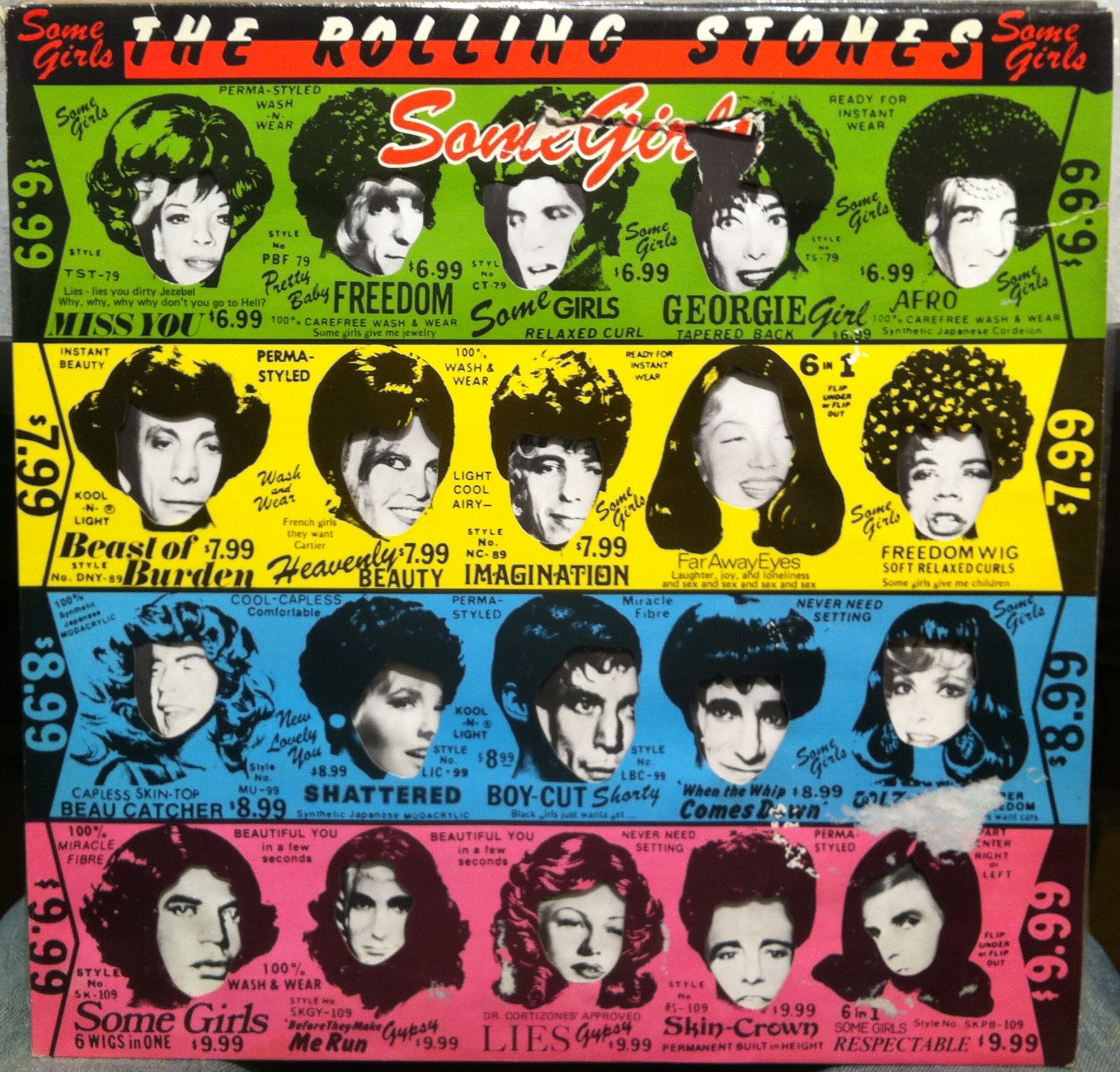
Some girls look like boys with wigs on...
The band recorded the album over a period of several tense months in 1977. While most of the world was enjoying STAR WARS, guitarist Keith Richards was sweating a possession of heroin charge (he was busted up in Canada). Suddenly, with the prospect of losing their lead guitarist for several YEARS–the Stones got serious and recorded 50+ songs. It was during this time that Jagger, with Richards distracted, took up the bulk of the song writing duties. SOME GIRLS was a product of his frantic writing/recording period.
The album opens with “Miss You,” a bluesy-disco tinged song that became the band’s final #1 song in the USA. Unlike a lot of music from this era, the song remains catchy and cool as hell–despite the disco influences. I think the reason for this is simply, the Stones didn’t do a full disco song. The rest of SOME GIRLS is an interesting mix of punk and country (believe it or not). “Far Away Eyes” being an extreme, almost country parody and on the other end “Lies” tips closer to blind aggression of the early punk scene. Somewhere in the middle falls the rest of the album. It’s this middle where the magic is.
I have three favorite songs on this record, which in itself says a lot about its overall greatness. They are as follows (in no particular order):
1. “Beast of Burden”
2. “Before They Make Me Run”
3. “Shattered”
“Beast of Burden” with its crazy-ass falsetto and rolling guitar licks is a masterpiece. I’ve read that some of the lyrics were improvised by Jagger on the fly…I’m not sure I buy that, but part of the song’s greatness is how laid-back/casual it seems to flow. On the other end of the spectrum, is the precision and edginess of “Shattered.” Jagger’s practically spitting the verses at you, while the guitar chugs along in the backroom…before BAM! Awesome fucking solo (with hand-claps, which is always important).
There’s a theory that the reason this record sounds so good is because the band finally got a third guitarist–SOME GIRLS marks the first appearance of Jagger the guitar player. Not sure how much water that theory holds, but the music side of things does seem more complex than earlier Stones records.
And while he’s not the world’s greatest singer, I do love the Keith Richards “Before They Make Me Run.” Of course it has an amazing, holy-grail-like guitar lick. The song, though not sung my Jagger, is probably (in my opinion) the best example of a “Rolling Stones Song.” All the elements are there: killer guitar, hooky-but simple lyrics, a bluesy-country feel…it’s awesome. It makes me wish Richards had given up smoking cigarettes (his voice sounds like crap now, way too raspy). He might have even turned into a hell of a vocalist–we’ll never know. I think its funny how confident Richards playing is, but how almost quiet the vocals are. You can tell he knew he wasn’t a very good singer–I’ve noticed this on a lot of the early Clapton solo records, too. I took Clapton a long time to get the nerve to belt out “Layla.”
SOME GIRLS is a classic album, and arguably the last great record from one of the world’s greatest rock bands. Most people have actually heard 65-70% of this record via classic rock radio (which plays damn near everything on it). The damn thing is practically a GREATEST HITS for their 70’s period. This one is definitely on my “Desert Island” List of great records. Go check it out–or if you have it (like me) go give it a re-listen.
 Defending Axl Rose