Category Archives: Album Reviews

WORLD PSYCHEDELIC CLASSICS #5: WHO IS WILLIAM ONYEABOR?

One of my favorite parts of a new Tarantino film is the soundtrack.  I’m not sure how the legendary director finds time to be an expert on obscure cinema and pop music, but his films always feature interesting songs.  Besides reinventing classic hits of yesterday, Tarantino has an amazing knack for digging up forgotten gems by artists I’ve never heard of.  The Luaka Bop label does something similar, releasing a staggering assortment of amazing re-issues from grossly overlooked musicians from across the globe.

who_is_william_onyeabor_album_cover

WORLD PSYCHEDELIC CLASSICS #5: WHO IS WILLIAM ONYEABOR? is a fantastic record.  Actually scratch that, it’s a mind-blowing record.  It’s the kind of thing that sounds too good to be true: the greatest cuts from a reclusive Nigerian funkmaster, recorded at the height of his power in the late 1970’s/early 1980’s.  There’s a whole thrilling behind-the-scenes story behind this re-issue but it’s really too involved to get into here.  If you’re interested I highly suggest you check out this article on the subject at NPR’s website.  The short version is: you’ve never heard of William Onyeabor because he quit the music business to be a crazy religious zealot.

But I’m not as concerned with the man as I am with the music.   I’ll let his God pass judgment on William Onyeabor’s soul; his funk on the other hand, I can pass a fair amount of judgment.  When I first heard WHO IS WILLIAM ONYEABOR? I thought it was a brand new album and not a re-issue.  The music sounds like a fresh, contemporary take on classic 1970’s funk.  Onyeabor’s music, while being very much rooted in funk, has a generous helping of psychedelic flourishes.  These psychedelic flourishes, along with a keen sense of innovation, is what sets this music apart from other funk recordings of the period.  The only modern equivalent to Onyeabor’s sound that I can come up with is Wayne Coyne of the Flaming Lips.  Imagine the more playful Flaming Lips tunes covered by Funkadelic and you’re on the right path to reaching Onyeabor’s sound.

The songs are long-form grooves that ebb and flow into glorious Technicolor flourishes.  Onyeabor has a gentle, self-assured voice that helps take the sting out of his strange, droning lyrics.  The best example being on “Atomic Bomb” in which he professes that he’s going to explode like the titular bomb.  The proto-electronica/trance of “Good Name” becomes all the more hypnotic with his “nobody, nobody, nobody” chant.  While Onyeabor’s vocal-styling may not be earth-shakingly innovative, it’s really the only part of his music that isn’t.

I can totally understand how this music was overlooked globally when it was initially released—Onyeabor was clearly ahead of his time.  Check out the opening of “Let’s Fall In Love,” sure it’s rooted in late 1970’s disco but there’s a cold, computer-like quality clearly predicts the coming rise of techno music.  The layers of synthesizer and saxophone meld into something strange and beautiful.  It staggers my mind this guy was making music like this in the year 1983.  The level of sophistication on display all over WHO IS WILLIAM ONYEABOR? makes one wonder what would have happened had Onyeabor continued to make music? There nine tracks, taken from eight albums, paint a fascinating what-if? scenario.

Definitely take a moment to listen to “Let’s Fall In Love” and “Atomic Bomb.”  Let the songs wash over you, and keep in mind that these songs, as fresh as they sound are over 30 years old.

Tagged , , , , , , , , , , , , , , , , , ,

FLOATING OUT TO SEE By Gringo Star

Atlanta-based rockers Gringo Star returned this year with their third album FLOATING OUT TO SEE.  The band endured a couple of serious changes since their last album, COUNT YER LUCKY STARS came out in 2011.  For starters, the band lost one member/songwriter.  Then the band decided to forgo the usual studio/label process and instead record and distribute FLOATING OUT TO SEE for themselves.  So much change was bound to be reflected in the band’s new music.  That said, FLOATING OUT TO SEE marks a dramatic change for the band.

gringo-star-floating-out-to-see

Perhaps change is the wrong word, call it instead an evolution. FLOATING OUT TO SEE takes the psychedelic elements found on COUNT YER LUCKY STARS and increases them greatly.  Gringo Star continues to be influenced by the British-invasion era rock bands, but sonically the band is more spacey and expansive on FLOATING OUT TO SEE.  Though Gringo Star still reminds me of The Kinks, on FLOATING OUT TO SEE its as though The Kinks are playing 20,000 leagues under the sea.  The production has a murky, dreamlike quality that married with the sometimes-surreal lyrics make FLOATING OUT TO SEE a wacked-out beach party.

From the chirpy evanescence of “Find A Love” to the gloomy “100 Miles,” FLOATING OUT TO SEE covers a lot of sonic ground in a very short amount of time.  The album’s concentrated quality does mean that it takes a few listens before the album gives up all its hooky-secrets.  That’s not necessarily a bad thing, but it does mean that FLOATING OUT TO SEE lacks the immediacy of its predecessor.  Tracks that do immediately stand out, however, are “Peephole” and “Going Way Out.”  The former feels like a classic Ray Davies track with its jangled tale of neighborhood paranoia.  Likewise, “Going Way Out” recalls the dreamy popscape of John Lennon’s “#9 Dream,” it’s a fantastic song that sounds even better in the dark with headphones.  In fact, I’d encourage you to listen to the album at least once with headphones.

The album overall has a very chill vibe.  But that’s not to say that FLOATING OUT TO SEE is totally laid back and tranquil.  The garage rocker “Taller” gallops and the edgier “Look For More” has a thumping, brash Tame Impala-like quality that I really dig.   Really the complaint one could lob against Gringo Star is that for an album with 13 tracks, it runs a tad short at just over 35 minutes.  Sometimes less is more, but I’d really have liked for FLOATING OUT SEE to last just a little longer.

Change can be a scary thing, but Gringo Star has weathered it nicely.  On FLOATING OUT TO SEE they’ve crafted a solid album during a period of what could only have been chaotic and uncertain.  Hopefully the band will continue to grow and get us another batch of exciting material sooner, rather than later.

Tagged , , , , , , , , , ,

FERAL II: WILDLIFE by New Fad Zoo

New, New Fad Zoo

Barbeques, pool parties, hot chicks, cool dudes and everything in between: welcome to the world of New Fad Zoo.  The Atlanta-based rap group’s second album, FERAL II: WILDLIFE, is another trip down the rabbit hole of expertly crafted music.  Just like on their 2011 debut record, New Fad Zoo blur the lines of genre.  The band expertly marries thoughtful, sometimes funny, lyrics with top-notch musicality.  These guys can do it all: write catchy hooks, pivot from jesting to serious philosophical musing, and create a musically diverse album. 

I was initially skeptical when I saw that band had chosen to name their second album FERAL II.  The idea of sequels, in any media, usually conjures thoughts of desperate cash-ins and creative bankruptcy. Fortunately, FERAL II: WILDLIFE takes the focus and energy of FERAL and expands upon what New Fad Zoo has already done.  Not only did the band avoid the dreaded sophomore slump, but they managed to surpass their first record in every respect.

The delightfully cheeky album opener “Party Animals” asserts dominance over the listener with its funky groove and big cat growl.  New Fad Zoo tosses this goodtime party song off effortlessly, as if writing a fun song were breathing.  The moody “Strobe Lights” explores the darker side of love and the desire for fame and has a hauntingly cold, electronic sound that recalls Kanye West’s 808s AND HEARTBREAKS. Meanwhile the album closer “You Are Loved” is a tender ballad that manages to combine late 1980’s Billy Joel and Outcast (and that’s a good thing).  Any band would be lucky to master one style, New Fad Zoo is adept at all three: modern party song, moody electronic rap, and classic R&B.

FERAL II presents the listener with the complicated worldview of talented young men.  The band’s attitude towards drugs, alcohol, and women schizophrenically seesaws over the course of the album.  Like all good heroes, the boys of New Fad Zoo are complicated–sometimes falling into the trap of objectifying women yet also acknowledging on the track “Triangle” that: “if I had a daughter, I’d surely be pissed if a nigga dared harmed her, but that’s the world we be living in.” The song interestingly asserts that there are three groups in the battle of the sexes: Men, Women, and Bitches.  The song’s hook is sung by the angelic Melanie Annabelle who proclaims, “Women hate bitches, bitches hate men, men want the bitches, and women want men.” New Fad Zoo don’t pass judgment other than to point out that “it’s a fucked up world.” Indeed.

Will Rap 4 Food

New Fad Zoo’s first album had what I proclaimed to be a billion dollar single with “Love Is Wild.”  That song sadly failed to get snatched up by Madison Avenue ad executives or the numbskulls at Clear Channel.  I foolishly didn’t think they boys had it in them to craft another perfect single, but once again they surprised me and minted another $1B song: “Luv Is.”   The hauntingly beautiful hook, provided by Melanie Annabelle, and the awesome Beatles shout-out sold me on the song.  After listening to “Luv Is” a dozen times I’m confident in saying that this is the best song not on the radio today.

It’s easy to gush about FERAL II: WILDLIFE because like its predecessor, the album is the clear result of what happens when talent people pour their hearts out into their work.  There isn’t a single track that feels dashed off or undercooked.  New Fad Zoo clearly loves crafting, not just making, music and it shows.  No track sums this up like “Want It So Bad.” Part inspirational anthem, part pep-talk to themselves, “Want It So Bad” is the answer to the question of whether or not there will be a third New Fad Zoo album–and I can’t wait.

Tagged , , , , , , ,

BE by Beady Eye

BE

Beady Eye, the gutted remains of what used to be the Brit-Pop band Oasis, put out their second album this week.  Beady Eye’s first record, DIFFERENT GEAR, STILL SPEEDING was Liam Gallagher’s confident blast of bravado and proof that he could hold his own without his brother Noel.   Back in 2012 I proclaimed 2011 to be “The Year of The Battling Gallagher Brothers.”  Liam was the first of the Gallagher brothers to release a post-Oasis record and ultimately I felt his Beady Eye record was better than Noel’s strangely titled High Flying Birds record.

Fast forward to 2013, and my expectations were high as I fired up BE.  Would Liam be able to deliver another stellar album or would Noel’s absence be more fully felt?  My first impression was that BE was closer to the denser, mid-period Oasis albums like HEATHEN CHEMISTRY and STANDING ON THE SHOULDERS OF GIANTS.   I love both of those records, but they took a couple of listens before I found myself singing along.  Similarly, BE lacks the big hooks of early Oasis.  Also toned-down is the usual Beatles-influence.

BE has a spacey, almost distant quality that frankly took me by surprise.  There are definite tempo changes throughout the record, but everything sounds quieter and more subdued that DIFFERENT GEAR , STILL SPEEDING.  Standout tracks include the Lennon-esque “Iz Rite” and the quiet, dare I say introspective “Soon Come Tomorrow.”

The album has songs that should be rockers, like the third track “Face The Crowd,” but nothing on BE takes off like on Beady Eye’s first album.  So initially I was a bit underwhelmed by BE’s low-key shift, but after a few spins I warmed to the album. BE feels like a transitional album for Beady Eye.  On one hand, I’m a little sad Liam isn’t just doing Oasis 2.0 music…but on the other hand I’m glad he’s branching out into new territory—even if he that means we don’t get a few less raucous rockers.

I would be remiss, however, if I didn’t address BE’s most interesting song: “Don’t Brother Me.”  This is the song all of us Oasis fans have been waiting for—the one in which one of the Gallagher brother’s waves a white flag.  With lyrics like, “In the morning/I’ve been calling, I’m hoping you understand/All and nothing, I’ll keep pushing/Come on now, give peace a chance, take my hand, be a man” this is song is 100% aimed at Noel.  I know what it’s like to have a tempestuous relationship with a sibling, someone who you can both deeply love and feel tremendous anger towards.  “Don’t Brother Me” probably isn’t going to mend any Gallagher family fences (Liam sings about being sick of  “your lying, skimming, and you crying”) but it’s a start.

The worst thing I could say about BE (and actually I did this during much of Noel’s HIGH FLYING BIRDS) is that during most of the songs I found myself singing the chorus of “Fade Away” that ultimate-classic of an Oasis song: “While we’re living, the dreams we had as children fade away…”

BE gets an (un-ironic) “B”.

Tagged , , , , , , , ,

My Top 10 Albums of 2012

Why have end of year lists have grown in popularity over the past 10 years? What does it say about us as a species that we clamor for and around arbitrary lists created by people we don’t know? My own personal theory is that the popularity of end of year lists serves two functions:

1. Validation. Obviously we like having someone tell us that our opinions are the right ones, and seeing our favorite things on someone else’s end of year list does that. It’s comforting to know that we agree with others but it’s even more comforting when that other is a critic of stature like David Wild or Roger Ebert.

And

2. Facilitating our laziness. Why go out into the world looking for the best music, books, films, or art when someone in a black turtleneck can do all the heavy lifting for us? End of year lists distill a year’s worth of media into an easy to consume morsel. I’ve met people who base all their film watching on top critics end of year lists.

I’m guilty of both: I like looking at end of year lists to see my own personal tastes validated AND I like to use them to discover things I was too lazy to find on my own. I don’t think there’s anything evil or wrong about end of year lists, but they do tend to get out of hand this time of year. I think reading end of year lists are an okay use of your time…but I think making one of your own is a far better way to kill a few hours.

Why? Well, I think a great end of year list functions as a kind of yearbook. When I sat down to write my Top 10 Albums of 2012 list I started to simply list all the albums that really knocked my socks off this year. But then I started to consider things like “Am I still listening to these albums?” and “Do I see myself still thinking about/revisiting these albums in future years?” That made things a little more difficult, which I rather liked (I always do fancy a challenge).

So once I had my albums that moved me (or whatever) and then removed the ones I wasn’t still listening to, I found I had a much shorter list. I took that list and compared it to my blog for the past 12 months, chiefly–how many of these albums did I get around to writing about? What did I say? In the case of one album in particular, I found that I wrote about it A LOT. I factored that in when arranging my list from #10 to #1.

What was the most difficult part of making this list? Figuring out what actually came out in 2012 and what came out in 2011 that I only discovered this year. There were a TON of really great records that came out at the end of last year that I sadly only discovered this year—meaning they could not appear on my list. The record I most wanted to put on my list was Metronomy’s THE ENGLISH RIVIERA. That was probably the album I enjoyed the most this summer, but wouldn’t ya know it? It came out last year. I ran into a lot of that while making this list.

Please read this list, compare it to your own personal tastes (feel slightly validated) and then use it to lazily fill-in the parts of 2012 you overlooked or missed. Once you’ve done all that, jot down your own best of 2012 list, I think you’ll find it’s an interesting mental exercise and a fantastic way to reevaluated the music you’ve heard this year. Maybe even slip me copy of your list in the comments section below (I won’t judge).

With all that in mind, I present my Top 10 Albums of 2012:

10. HARMONICRAFT by Torche. Arguably the stupidest genre name of all-time is sludge metal. I don’t even know what that means. Torche’s album HARMONICRAFT is supposed to be sludge metal, but to me it just sounds like awesomely melodic hard rock. “Roaming” and “Kicking” are brilliant hard-rockers that sound like Jane’s Addiction meets The Cult. The album is dark and has a rough edge while still being catchy and fun. If you’re like me, you’re always looking for a hard rock that isn’t super-stoopid or endless banshee screaming: HARMONICRAFT strikes a nice balance between hard rock and pop. The guitar work is great, and so is that Brony-filled rainbow wonderland on the front of the album.

Torche-Harmonicraft-

9. COBRA JUICY by Black Moth Super Rainbow. I’m not really into electronica, but every now and then an artist comes out that manages to combine the best of rock/pop and dance music. Experimental music is really hard to like and even hard to recommend, but Black Moth Super Rainbow really pull it off on COBRA JUICY. It’s a neon-rave-up that’s got rock soul. Songs like “Windshield Smasher” and “Hairspray Heart” are what the second Sleigh Bells album should have sounded like: aggressively noisy yet super-groovy. Worth noting, this one was waaay off my radar, but was pointed out to me by my super-cool friend over at TAKEN BY SOUND, which is a really cool indie-rock music blog.

Black-Moth-Super-Rainbow1

8. WRECKING BALL by Bruce Springsteen. I know, I’m just as surprised as you are that Bruce Springsteen is on this list. I was listening to Little Steven’s Underground Garage and Little Steven (who is more than a little biased, being in the E-Street Band) talked up the record and played “Easy Money.” Before I could dismiss WRECKING BALL outright, I heard “Easy Money” and became instantly hooked. The whole album has a very electric-folk/Old-Timey feel to it. WRECKING BALL is Springsteen’s recession album, which while not much fun, does provide an excellent palette for a rough and tumble artist like The Boss. “We Take Care of Our Own” and “Death To My Hometown” are great, hardscrabble songs that could work for The Great Depression or the late 2010’s. Through it all, Springsteen remains a symbol of art nourishing us through the hardest of times. These are the times when a bard of his stature is most desperately needed. He didn’t disappoint.

SPRINGSTEEN_WRECKING_BALL_7x7_site-500x500

7. SLOW DAZE by Blonde Summer. Technically these 5 songs are an EP and not an LP, but after listening to SLOW DAZE on virtual infinite repeat this summer: I’m promoting it to full LP status. Blonde Summer’s amazingly breezy, super-fun album reminded me what it feels like to be young and just enjoying the warmth of summer: and that was just the title track. The rest of SLOW DAZE is top-notch indie-rock that’s fun (“Robots on Command”) and heartfelt (“Walking in Space”). Minimal and echo-y, SLOW DAZE is like a short romp with an incredible lover—it doesn’t last very long, but the warm glow it gives you lasts and lasts. Hell, I’m still tingling from the noise-rock of “December,” and it’s actually December now. SLOW DAZE owned my summer and has made me super-eager to see what these guys do next. But for now, we’ll always have this summer.

Blonde-Summer-Slow-Daze-sm

6. LONERISM by Tame Impala. Pound for pound, LONERISM has more cosmic-freak-out-otherness than any other album on this list. If you’ve ever wanted to get high without drugs, grab a pair of headphones and take this album into a dark room. Close your eyes and prepare to go on adventure. Imagine Oasis and The Flaming Lips doing a shit ton of LSD and then merging into one band: that’s LONERISM. “Endors Toi” and “Elephant” shatter your mind and then blow away the pieces. I really liked BEARDS, WIVES, DENIM by Pond, which is essentially Tame Impala, but overall I think LONERISM is the stronger, more accessible record. But don’t take my word for it: go sit in the dark tonight with this album.

impala

5. CLASS CLOWN SPOTS A UFO by Guided By Voices. One of my all-time favorite bands came back, and they came back in a big way this year. Not only did the original GBV line up return to tour, they released not one…not two…but three incredible records. When was the last time a band came back after disbanding and put out ONE good album? Exactly. Robert Pollard is a rock ‘n roll Jesus (sorry Kid Rock). Picking which of the three albums to put on this list was hard, but also kinda easy: of all their 2012 records, this is the one I rock out to the most. The title track is probably the greatest GBV “single” in a decade. “Keep It In Motion” and “Forever Until It Breaks” are icing on the cake. All GBV albums have short, micro-songs that many people dismiss, but CLASS CLOWN SPOTS A UFO has the best short Pollard nuggets I’ve heard in a long time (“Roll of the Dice, Kick in the Head”). And don’t get me started on the awesome, Who-like “Billy Wire.” Okay, I’ll get started on it: “Billy Wire” fucking rocks my socks and makes me feel like I’m a badass Mod seeing a super young/virile Who tear up a small English nighclub. Long live GBV.

Guided-By-Voices-Class-Clown-Spots-A-UFO-COVER-1024x1024

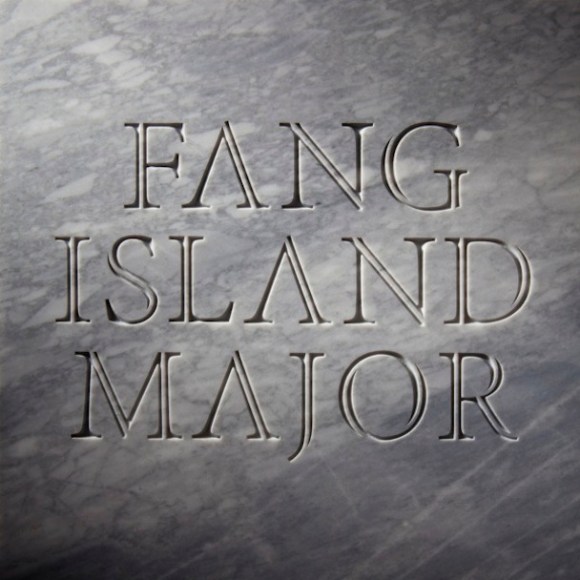
4. MAJOR by Fang Island. Fang Island does what Torche does in that, they offer up heavy riffs with strong melodies. The difference is that Fang Island is more indie rock than mosh pit. “Sisterly” is so hard-charging but at the same time sweet. I don’t mean “Dude that’s sweet,” I mean little kitten hanging on a clothesline sweet. Fang Island are so cool they don’t care what you think of their earnestness. These guys are serious musicians, too. Even if you don’t usually go for instrumental rock, you’ll dig their instrumental “Dooney Rock.” It’s an interesting, tasteful, non-wankfest that will win over even the most jaded music fan. Fang Island is equally heavy and gentle; it’s hard indie rock for sensitive hearts.
Fang-Island-Major

3. LOVE THIS GIANT by David Byrne & St. Vincent. Who knew that teaming up the dude from Talking Heads and that weird indie-chick St. Vincent would yield such a good harvest? The bombastic lead track “Who” is real stunner, but it’s the one-two-punch of two unlikely freaks getting together and letting their freak flags fly that elevates LOVE THIS GIANT beyond “Who.” This is Byrne’s strongest post-Talking Heads work, hands down. It wasn’t that I’d written him off so much as I just didn’t bother to really think too much about David Byrne at all. LOVE THIS GIANT re-establishes Byrne as a relevant artist with a lot more to say. I wasn’t super familiar with St. Vincent prior to LOVE THIS GIANT, but I’m learning. That she’s half his age and still manages to hold her own in the presence of such a legend is no small feat. I still get chills every time I hear “Optimist.” So, in summary: the triumphant return of one of rocks most unlikely superstars plus a rising indie-songstress plus crazy horns equals LOVE THIS GIANT. It’s a record that you put on and feel refreshed, challenged, and puzzled by.

david-byrne-and-st-vincent-111366-love-this-giant

2. A DIFFERENT KIND OF TRUTH by Van Halen. Nobody thought that a new Van Halen album was going to be a dismal failure more than me. Go back and check the endless jaded, negative, anti-Wolfgang posts. I’m a big man, I can admit when I’m wrong. Sure, “Tattoo” fucking sucks. It’s the worst song on the album and it’s slightly embarrassing…but everything else on A DIFFERENT KIND OF TRUTH works. Maybe the songs are recycled from decades long since past, but so what? They were still re-worked and recorded by the Van Halen of today, and they don’t disappoint. It’s like it’s 1984 all over again: big choruses, crazy solos, thumpin’ drums, super-bravdo, etc. Van Halen don’t reinvent the wheel so much as get it rolling again, and thank God…because rock was starting to get so dismally boring. “Blood and Fire” recalls the pure adrenaline of “Panama.” “You and Your Blues” is like an update of “Unchained.” Van Halen shouldn’t work in 2012, but somehow they do. My favorite track, the one that gets the most play at the gym is the stupidest: the frivolous “Stay Frosty.” Why does “Stay Frosty” continue to get played? Probably because it’s a straight up rocker that’s fun and funny. While I was busy being jaded, Van Halen was busy partying. At a certain point, it’s easier to just give-in and love them. So you win guys, A DIFFERENT KIND OF TRUTH rules.

van halen

1. PSYCHEDELIC PILL by Neil Young & Crazy Horse. I am completely and utterly in awe of this album. Long, meandering, and epic, PSYCHEDELIC PILL was the one album this year that could have been released in 1968 or 1970 not no one would have blinked. Not because it sounds like it’s from that period in time, PSYCHEDELIC PILL is truly a record out of time: intensely personal and yet also very distant and spacy. This is a folk record. This is a jam-band record. This is a singer-songwriter album created by a full band. “Walk Like A Giant” is the work of an incredibly powerful wizard, hurling lightening bolts of rock. I had no idea Neil Young still had it in him to create such a potent work of pure genius. This doesn’t even sound like a comeback it sounds like he never left. Those who scoff at the albums longer cuts, of which there are a few, are missing the point. Like I said in my original review: “the album opens with “Drifting Back,” a 27 minute-long song that’s acts as a kind of sonic air lock, decompressing the listener into the album’s atmosphere. Or perhaps a better metaphor would be that’s a time machine. I like that better because PSYCHEDELIC PILL sounds like lost 1970’s record, with the lengthy “Drifting Back” serving as a trippy time tunnel to the past.” The free flowing extended jams are the destination, not the journey. PSYCHEDELIC PILL is an intricate album that I predict will endure as a kind of sonic evergreen, which will be studied and appreciated for decades to come. Do yourself a favor and check out this once-in-a-generation masterpiece.

untitled

Tagged , , , , , , , , , , , , , , , , ,

George Harrison’s Final Masterpiece: BRAINWASHED

I still can’t believe that George Harrison has been dead for 10 years. It seems like only yesterday we lost him. Of all The Beatles, I think George has the strongest, and more overlooked solo material. Paul and John always stole the limelight while they were together and in their solo careers they continued to overshadow poor George, which is a shame because he had a bunch of really sublime songs.  His first solo record, the first solo record from any Beatle, ALL THINGS MUST PASS is stupendous work that is probably one of the finest rock albums of all time.

After his triumphant first release George put out a bunch of really strong, but mostly ignored records in the 1970’s and then slowed his output to only 3 records in the 1980’s. There were two awesome Traveling Wilbury records and 1987’s CLOUD NINE, the nothing. When George died in 2001 after a long battle with cancer, my first thought was a selfish one: no more George Harrison songs. Thankfully, George was hard at work on a new record right up till his death. He finished most of the recording and left detailed notes behind so that Jeffy Lynne and his son Dhani Harrison could finish the record.

brainwashed

Posthumous releases are, quiet frankly, pretty shitty normally. Think about it: you’re dying are you really going to do your best work? But amazingly BRAINWASHED turned out to not only be a good record, but one of George’s best. In fact, I’d say it’s nearly tied with ALL THINGS MUST PASSED.  And the only reason ALL THINGS edges it out in my mind is because it’s a double album and thus, has more songs.

So what makes BRAINWASHED so good? For starters, the songwriting. Harrison learned songwriting from arguably the two greatest songwriters of all time so of course he was going to be able to write a good song. Besides being immediately accessible and catchy, the songs on BRAINWASHED all have a very down-to-earth feel. While not a concept album, the album’s songs all tend to be about assessing one’s life. That shouldn’t come as any big surprise considering that Harrison was knocking on death’s door. But whereas my death-album would be a series of pathetic screams of “Dear God not me!” George not only puts on a brave face, but appears beautifully serene in the face of his end. Entire books could be written about Harrison’s spirituality, and while I’ve heard many people question just exactly what he believed (and how strongly he believed it) there’s no arguing that whatever he let into his heart gave him a tremendous amount of strength and comfort. How do I know? It’s all here, persevered forever on BRAINWASHED.

The album opens with the playfully philosophical “Any Road” which points out that if you don’t know where you’re going, any road will take you there. It’s a great song to open the album; its footloose and breezy attitude encourages the listen to embark on an adventure, any adventure. “Looking For My Life” is the first in a series of songs where George turns inward and examines his life. It’s a song about being through the wringer and separated from God but not really knowing it until things get rough. All of the problems raised by “Looking For My Life” are immediately answered in the very next song, “The Rising Sun.” Through spiritual re-birth and the actual re-birth of the day George found the answer to his problems. “The Rising Sun” is such a beautiful, hope-filled song I can’t believe it was penned by a man who knew he wouldn’t live to see many more sunrises. And don’t get me started on that slide guitar, has there ever been a more beautiful sound than George playing slide guitar? It’s Harrison’s signature guitar tone and on “The Rising Sun” in particular it’s used to great effect.

glowing inner light

The album’s single, “Stuck Inside A Cloud,” is ironically the records biggest downer. Don’t get me wrong, it’s a great song, but it’s a depressing final single.   “Stuck Inside A Cloud” seems to be about a lasting, incurable depression brought about (or perhaps causing?) a break-up. I think it might also be a metaphor for how disconnected we all are.

One of the most interesting songs, especially when I first heard BRAINWASHED was “Run So Far.” I had a strange bit of déjà vu where I was able to predict all the lyrics. I thought I was going insane until I was finally able to figure out where it was I’d heard the song before: Eric Clapton’s 1989 solo effort JOUNREYMAN. George wrote the song and gave it to his friend/wife-stealer and then waited a decade to record it himself. I must say, I like George’s version better, but only for the same reason I always prefer Dylan’s version of his songs: it’s always better to hear it from the author.

There’s a nice bit of whimsy near the end with a cover of “Between the Devil and the Deep Blue Sea” on which George plays the ukulele. I smile every time I hear this song, mostly because I know that had a very special place in George’s heart. He and John Lennon famously bonded over the ukulele. George’s choice in instrument adds a jaunty-nautical feel to the song. It’s probably my favorite version of this song.

The album concludes with “Brainwashed,” George’s final ode to God, whom he loved so dearly. Of all the songs on BRAINWASHED, “Brainwashed” feels the most like a Traveling Wilburys song. I’m not sure if it’s the songs humor (his grandma was brainwashed while working for the mob?) or the excessive Jeff Lynne production, but until the song transforms into the prayer “Namah Parvait” it could have easily fit on the Wilburys VOLUME 3.

George began his solo career with a phenomenal album and he thankfully was able to finish his solo career with a phenomenal album.  I’ve read that BRAINWASHED was a bit of a disappointment commercially, which is a real shame and one of the reasons I decided to write this post.  If you like The Beatles, rainy day music, hope in a hopeless world, ukuleles, top-notch songwriting, strong hooks, slide guitar, and Eastern chanting you owe it to yourself to check out BRAINWASHED.

Tagged , , , , , , , , , , , ,

FERAL by New Fad Zoo

When it comes to finding new, awesome music, I try to be as proactive as possible.  I’ve checked out bands/albums because of reviews I’ve read in magazines (both positive and negative), TV appearances, ads online, and even patches on jackets I see at concerts.  One thing that I am notoriously bad about, however, is taking personal recommendations.

I’m a notorious reader and my office is filled with books that people have given me that I simply “must read.”  I try to get around to them eventually, but I’m fickle when it comes to doing things I “have” or “must” do.  It goes the same way with music.  Since starting DAR, I’ve had more than a few people I both know and don’t know try to give me music I “must” hear.  There’s only a handful of people who can tell me to listen to something that’ll actually convince me drop what I’m doing and put headphones on: one is an Uncle in Tennessee.

Anyway, I was on Facebook and a friend of a friend that I’m somehow friends with (ah, the digital age) posted a link to a Kickstarter fundraiser for his brother’s band. They wanted to go on tour and were trying to raise funds.  I like the idea of Kickstarter, even though I’ve only contributed to one (now two) so I checked out the link.  And thus, I was indoctrinated into the world of New Fad Zoo.

new fad zoo

“I’m what happens when shooting stars and Mars meet, with the Big-Bang theory heartbeat, in High School I hung out with bullies and smart geeks, stoners and jocks, slut goths and car freaks, I ain’t fitting in I’m an artist.”

People are always surprised when they find out I listen to rap (or country for that matter) but the truth is there isn’t a genre of music I don’t like or listen to.  I will say that I’m not as much an authority on rap as I am on rock, pop, and blues.  But I do like rap, in fact, many current readers might be surprised to know that the very first album review posted on this blog was a review of The Beastie Boys HOT SAUCE COMMITTEE PART TWO.

But I digress.  New Fad Zoo are a quartet of dudes living in Atlanta whose first album, FERAL is the real deal.   What sets New Fad Zoo apart from the mob of pretenders is a knack for strong hooks and a razor sharp wit.  I was  blown away by how musically diverse/textured FERAL is.   Now, I realize that today’s generation of rappers are just as likely to know music and/or play an instrument, but I still feel like many (especially in the underground) still don’t place enough emphasis on music.  A beat is important, but if you can create a musical hook equal or greater to a lyrical hook—then you have a million dollar song.

New_Fad_Zoo_Feral-front-large

New Fad Zoo doesn’t just have a few million dollar songs—they have a couple of billion dollar ones, too.  The heart-felt “Smile 4 Me,” the club-thumping “Ima Needa,” and “Love is Wild.”  I would like to go on record and say that “Love is Wild” is a number 1 record.   Period.  The record industry is all screwed up today, so it might not happen, but some savvy film producer or commercial director place that song in their film/ad it would sell 5 million units on iTunes.  “No Such Utopia” and “Me Against The World” take a break from the fun and are poignant, painfully honest songs about grief, fear, and anger.  In the context of the album, these harder-edged, serious songs provide much needed balance that many artists fail to achieve.

This balance only further underscores the fact that New Fad Zoo are a serious music force.  One that not only gets your head bobbing, but is able to get their songs implanted deep into your brain.

Tagged , , , , ,

Classic Albums Revisited: The Greatest Living Englishman

I’m sure 99.999% have never heard of Martin Newell and The Cleaners From Venus.  They’re not household names.  Newell formed The Cleaners in 1980 and put out a couple of really fantastic, old-school 1960’s-esque British pop albums.  They were all released on cassette and put out via a West German label.  Here in the States, the Cleaners two RCA albums have been re-released on CD a few times, but with little fanfare.  I strongly urge you to seek out GOING TO ENGLAND, it’s a fantastic album.   England, that dreariest of islands, has an incredible ability to churn out super-talented songwriters.  Mr. Martin Newell is such a songwriter.  Though the Cleaners albums were all shoddily recorded,  I’m always amazed at how his songs pop and rise above the limitations of their production.

Ah! Just look at that healthy, British complexion.

It wasn’t very cool to like The Beatles in the 1980s, especially in England.  Punk and New Wave were all about going forward, not looking back.   I suspect that this is part of the reason Newell & The Cleaners From Venus were never able to hit it big.  Steeped heavily in 60’s pop, Newell worships at the alter of Lennon which is  evident the first time you hear his songs.  And just like Lennon, Newell is big on melody, wit, and cynicism.

By 1993 Newell had given up on The Cleaners of Venus and decided to start a solo career.  His solo debut, THE GREATEST LIVING ENGLISHMAN, got a major boost when XTC frontman Andy Partridge agreed to produce the record (and play drums).  Like Newell, Partridge was a Beatle-fan at a time when being Beatle-fan wasn’t in vogue, the two were musical blood-brothers. And while XTC was by no means the world’s most popular band, they’d had enough success worldwide that Partridge’s involvement in THE GREATEST LIVING ENGLISHMAN helped boost interest in the album get heard over here in the U.S.

THE GREATEST LIVING ENGLISHMAN is a fantastic record, dripping with catchy hooks.  The music is very Beatle-esque with a Kinks-like lyrical slant.  This is a very, very British record.  The album opener, the sublime “Goodbye Dreaming Fields,” recalls Ray Davies waxing nostalgic for the village green—although for Newell it’s a dancehall that he mourns.  The snappy “She Rings The Changes” feels like a long lost single from 1969, as one listens to THE GREATEST LIVING ENGLISHMAN the sense of musical déjà vu can become overwhelming.  These songs are so good and seem so catchy you’ll swear you’ve heard them before.

And  though it’s a very upbeat, fun album, I really appreciate the way Newell snarkily attacks aspects of the socio-economic inequality in England.  This is particularly evident on “We’ll Build A House” which addresses poverty and the inability for many young people to have something so basic as a home.  In a similar vein, “A Street Called Prospect” paints an incredibly detailed sound-picture of life on a very shabby English street called Prospect.  The first time I heard this song I laughed because there’s a street called Prospect in the town where I’m from…and it’s a piece of shit too.  “The Jangling Man,” like “We’ll Build A House” describes the gulf between the wealthy older class and the “poor starving children.” It’s a terribly bitter, angry song, and yet Newell’s pop sensibilities manage to keep the track from sounding bitter or angry.

“Before The Hurricane” tackles British country life, specifically the head-in-the-sand attitude of those living in rural British communities.  Bombs and hurricanes can come, but nothing really changes anything for them.   “Home Counties Boy” offers a glimpse into Newell’s country upbringing and disdain for working in the city.  Both songs remind me of the Kink’s in both their quaintness and  in the interesting duality of both their yearning and disdain for rural life.

I’ve always loved British fatalism and Newell has it in spades.  My favorite track on the record, “Tribute To The Greatest Living Englishman” is about falling from the good graces of the public—and how much we like to see a public figure fall.  I like Newell’s song because the song’s narrator (it can’t be about him, he never rose high enough to fall) attitude towards the loss of his champagne wishes is a shrug and “it would have been mad not to try.”  I can certainly see how this sort of music would not be for everyone, but it’s like catnip for a pop-fan like me.  THE GREATEST LIVING ENGLISHMAN is the best Martin Newell record (solo or otherwise) and thankfully, it’s the easiest to come by these days.  I heartily recommend this album if you like cheeky, catchy pop.

Tagged , , , , , , , ,

PSYCHEDELIC PILL by Neil Young & Crazy Horse

Short and sweet. There’s something to be said about a masterful economy of length.  Long things, whether they are books, films, or albums tend to intimidate us.  Our lives are all so busy and hectic, there doesn’t seem to be time for anything substantial anymore.  Short can be sweet, but sometimes you have to kick back and ramble.

Psychedelic Pill: like trippy Pony Express.

At 67 years old, Neil Young should be slowing down.  He should be basking in the glory of his recently published memoir, WAGING HEAVY PEACE.  Young should be doing greatest hits concerts for $150 a pop to a sea of balding, gray heads.  But Neil Young wouldn’t be Neil Young if he didn’t have a bit more on his agenda. I can’t believe it, but in 2012 Neil Young has released his finest record.

Note that I didn’t say perfect or most commercial or the record I’d recommend to my friends; but PSYCHEDELIC PILL is without a doubt Neil Young’s finest record to date.  It’s a wild and wooly album, full of long and intricate songs that manages to perfectly instill the very essence of Young.  I don’t think that one double-album can totally encapsulate an artist as varied and masterly as Neil Young, but PSYCHEDELIC PILL does an amazing job showcasing why he still matters.  These are not gentle, old-man-telling-you-a-story-from-his-rocking-chair songs.   Neil Young & Crazy Horse are not in grandpa-mode at all on this album; PSYCHEDELIC PILL is a rocker.

One of the reasons it’s taken me so long to write about this album is because it’s long and intimidating. The album opens with “Drifting Back,” a 27 minute-long song that’s acts as a kind of sonic air lock, decompressing the listener into the album’s atmosphere.   Or perhaps a better metaphor would be that’s a time machine.  I like that better because PSYCHEDELIC PILL sounds like lost 1970’s record, with the lengthy “Drifting Back” serving as a trippy time tunnel to the past.  I can tell you that this album is a classic and will stand the test of time because it sounds neither vintage nor modern.  Listening to PSYCHEDELIC PILL, it’s impossible to really get a feel for when it was recorded, that’s the very epitome of timeless.

Immediately following the long “Drifting Back” we’re treated to the title cut, “Psychedelic Pill” which serves as a short palate cleanser of soaring, fuzzy guitar tones.  It’s a welcomed gulp of pop before Young plunges us back into the lengthy “Ramada Inn.”   That song, which focuses on the later years of an alcoholic, veers off into long tangents of guitar that walks the fine line between sublime and hypnotic. You either have the patience for this sort of stuff of you don’t.  One wonders how autobiographical “Ramada Inn” is (Young is now sober after years of drug and alcohol abuse).

Speaking of autobiographical, “Born in Ontario” and “Twisted Road” are two really great songs in which Young sings about his beginnings both as a young Canadian and as a newly minted songwriter hearing Bob Dylan’s “Like A Rolling Stone.” Both songs have a breezy, confident feel to them.  “Twisted Road” has my favorite lyric of the album in which Young describes Dylan as Hank Williams “chewing bubble gum.” It’s a great line that never fails to make me smile, no matter how many times I hear it.  “Twisted Road” is a bit odd because it’s strange to think of Neil Young as a Bob Dylan fan.  Young and Dylan are like Gods, the thought of them being fans is a strange concept, though ultimately it’s very endearing.

The best song on the album, in my opinion, is the moody “Walk Like A Giant.”   Even though it clocks in at just over 16 minutes, I’ve listened to it dozens of times, and on each listen I’m blown away at how sonically diverse it is. In the song, Young sings “I want to walk like a giant on the land” as far as I’m concerned with PSYCHEDELIC PILL that’s just what Neil Young is—a giant, peerless and at the top of his game.   It’s one long, strange trip that’s already become one of my all-time favorite songs: how can this be? Maybe I wouldn’t be so over-the-moon floored by this album if I hadn’t long ago written Neil Young off.

Special mention should be made of Young’s famous backing band.  People have criticized Crazy Horse over the years as not being a very “good” band.  And to an extent I can understand that.  They’ve always been a loose, almost garage-band kind of entity that might not work for every occasion, but here the band fits the material like a glove.  I can’t imagine any of these songs without them, each track a beautiful sonic assault.  Crazy Horse may be a blunt instrument, but they’re an instrument nonetheless, and here they’re utilized to great effect.

Lastly, I’d like to encourage anyone reading this to give PSYCHEDELIC PILL a listen but keep a few things in mind.  This album is about as anti-iTunes as one can get.  This isn’t a take a few sips/try it out a little at a time kind of album, you need to commit to sitting down and listening to it.  Yes, some of the songs are really long.  Yes, it’s a bit indulgent in a few places (“Ramada Inn” and “Drifting Back” probably could have been trimmed a smidge).  But overall it’s a fantastic album that every rock fan should check out.  PSYCHEDELIC PILL should be heard in a dark room with headphones. There’s been much discussion of the lost art of album making, and I would argue that people have lost the ability to listen to an album.  This is life changing, earth-shattering rock; have the decency to give it your full attention.

Tagged , , , , , , , ,

SUNKEN CONDOS by Donald Fagen

Duos are a funny thing.  A band is like the engine of a car; there are multiple parts working in tandem and all are needed for everything to work.  Solo artist are like trapeze artists, they walk the high-line naked and alone.  If they fall, they fall with all eyes squarely on them. Duos, however, are a bit tricky.  Good duos, the really successful duos, are not made by the merger of two good solo artists but rather the joining of complementary talents. The relationship falls somewhere between husband & wife and mosquito & a pulsing vein.

*Flush*

So what happens when a duo parts ways? Well sometimes it’s good.  And sometimes it’s very messy.  The best example I can think of as far as a messy breakup is Simon and Garfunkel.  When their duo ended it meant great things for Paul Simon…and pretty much the end of Art Garfunkel.  Maybe that’s cruel, but I can name 10 Paul Simon songs, but I can’t name one Art Garfunkel song.

Steely Dan started out as a band and then devolved into the duo of Walter Becker and Donald Fagen.  Of the two, I’ve always liked Fagen better.  Fagen always seemed cooler to me.  When I found out that Donald Fagen had put out a new solo album this month, I was intrigued but not in any rush to hear any of the music.  I’m a pretty big Steely Dan fan, but I’ve yet to really venture into any of Becker & Fagen’s post-GOUCHO output.   I’ve heard nice things about TWO AGINST NATURE but I’ve been hesitant.  Steely Dan has always existed for me as a bit of a relic, a late 1970’s throwback.

But, someone forwarded me mix of Fagen’s solo stuff on Spotify and one track stuck out: “I’m Not The Same Without You.”  The horns.  The velvety groove.  The nasally sneer.  The chic, icy poetry.  Equally biting and mournful, “I’m Not The Same Without You” is everything that the best Steely Dan songs were.  In fact, had I not known it was a Fagen-solo track, I’d have just assumed that the song was from one of the two newer Steely Dan albums.

So I reluctantly dived into SUNKEN CONDOS (pun intended). And I’m here to tell you, that it’s good.  It’s really, really good. If you enjoy the acerbic wit and jazzy sensibilities of Steely Dan, you’re gonna love SUNKEN CONDOS.  Fagen’s album is everything there is to love about Steely Dan, but slowed down just a tad and with a bit more of a jazz-edge.

The album opens with “Slinky Thing,” which is a pretty good description of the album as a whole, actually.  It’s a classic bit of Fagen neuroticism, detailing the unease of dating a much younger woman (the titular “Slinky Thing”).  It reminded me a great deal of “Hey Nineteen.”  And that’s a good thing.

“I’m Not The Same Without You” is definitely the album’s lead-single and as I mentioned before, it’s really good.  As is the last track “Planet D’Rhonda,” about an insane (or insanely fun?) woman that you just can’t leave.  It has all the element of a Steely Dan song, but seems slower and feels a bit stripped-down.  I’m sure Becker could have gone nuts on this, and pretty much all the songs on SUNKEN CONDOS…but he didn’t.  He didn’t because this is the Donald Fagen show, and as such, the songs are a bit mellower.  Some might see that as a bad thing, or a weakness of the SUNKEN CONDOS, but I actually dig the laid-back mood of the album.

My favorite song on the record “The Weather In My Head” which compares the turbulent climate change-infused storms to the self-doubt and depression plaguing the song’s narrator: They may fix the weather in the world, just like Mr. Gore said, but tell me what’s to be done about the weather in my head? I think that’s a great line.  “The Weather In My Head” is a great blues song and it totally knocked my socks off the first time I heard it.  Usually Fagen’s writing is so damn obtuse and distant, that it takes a few listens before things sink in, so I was shocked when I not only understood the song’s meaning on the first listen.  I also found myself wholeheartedly agreeing with the song’s sentiment.

Solid songwriting, impeccable production and musicianship abound on SUNKEN CONDONS.  In fact, the only misstep is on “Out of the Ghetto” which sits in the middle of the album.  It’s (up) tempo feels off  compared to the rest of the album’s slower, unhurried pace. But the biggest problem I have with the song is in the lyrics: the talk of “discos” in 2012, even if Fagen’s being ironic, turned me off.  In fact, the song’s tongue-in-cheek take on race struck me as all wrong.  I think Fagen’s heart is (mostly) in the right place but I could see the song being…shall we say…misinterpreted by lesser minds.  “Out of the Ghetto” is definitely not the track I’d put on for someone new to Steely Dan or Fagen.

Overall I’d recommend SUNKEN CONDOS.  It’s a good album that’s inspired me to seek out more of Fagen’s more recent output, as well as made me interested to hear what Becker does when he’s not kicking it with Fagen.


EDIT: It was pointed out to me by a commenter on Facebook (seriously, why aren’t you friends with Defending Axl Rose on Facebook? Go “Like” it right now) that “Out of the Ghetto” was in fact a cover.  And in fact, they were correct the song is an Isaac Hayes covers, which not only explains the strange disco reference, but also adds all sorts of interesting shades of irony to the song.  Fagen is an interesting, complicated, cat.  My knowledge of 1970’s R&B/Soul music is laughably limited, so I would like to thank my friends over at Facebook for pointing this error out to me. 

Tagged , , , , , , , , , , , , , ,