Category Archives: Songs & Singles

Southern Complexities: Lynyrd Skynyrd & Race

I can’t speak to everyone’s experience, but when I was growing up I always found Lynyrd Skynyrd was one of those bands that always seemed to have  good songs on (classic rock) radio but was generally unlikeable. The reason Lynyrd Skynyrd was unlikeable was simple: they were stupid, racist hillbillies. The band embraced elements of Southern culture that made me uncomfortable, like the Confederate flag. One of their most popular songs was about a redneck State and endorsed a racist governor! But man, were those songs good.  Lynyrd Skynyrd was one of those bands I’d appreciated from afar.

Then about a year ago I heard “Sweet Home Alabama” on the radio. Rather than dismiss the song outright, I decided to actually listen to the lyrics. Being a recovering English major, I decided to apply the same techniques of literary analysis I’d use to fake-understand Coleridge to try to fake-understand Lynyrd Skynyrd. It turns out that listening to a rock song via a fuzzy FM radio station is not the best way to study lyrical depth. I decided to go home and pull the lyrics up online and listen to the song again.  Thus began my slow descent into studying Lynyrd Skynyrd. I’m going to write a whole lot more words, but for those with little patience (or interest) let me sum up my rambling tirade thusly: Lynyrd Skynyrd, it turns out, was not the band you think they were. I don’t think there’s a band more commonly misunderstood that Lynyrd Skynyrd.

Lynyrd Skynyrd hailed from the South, and with that comes some complicated baggage, but I wouldn’t call them racists. The band wrote a lot of really fantastic, really surprising songs. The amazing part is that I didn’t come to this conclusion after hearing some buried b-side or un-heard deep album cut. The opposite is actually true: Lynyrd Skynyrd wrote and recorded fantastically genre-subverting rock songs that became massive hits!

There are three areas where the uneducated have Lynyrd Skynyrd all wrong: race, guns, and drugs. The band’s image, along with it’s membership, has shifted and changed over the decades so let me be clear as to what incarnation of Lynyrd Skynyrd I refer to in this essay. As most of you know, in 1977 Lynyrd Skynyrd was involved in a devastating plane crash that killed a great number of people.  The Lynyrd Skynyrd that I’m writing about was the original band, fronted by singer Ronnie Van Zant, who essentially ceased to exist after this terrible plane crash.  The band cobbled together from the crash survivors and Ronnie’s younger brother, Johnny Van Zant, is Lynyrd Skynyrd in name only as far as I’m concerned.  I will explain my specific reasoning for this later, but to put it simply: Lynyrd Skynyrd (1964-1977) were anything but stupid, racist hillbillies…the post-crash band, while not stupid hillbillies, tend to embrace the stereotypes commonly associated with Lynyrd Skynyrd.  Plus the songs aren’t a tenth as good, so there’s that.  This first post will specifically examine Lynyrd Skynyrd and race.  If people are interested I’ll post the others on guns and drugs.

LynyrdSkynyrd

Just a couple ‘o good ‘ole boys.

Look, I’m not going to attack or defend the Confederate flag.  I was born and raised in Missouri, a State that neither the North nor South seems to want to claim as their own. Personally, I wouldn’t own a Confederate flag but that said, I don’t think there’s a single flag on Earth that isn’t soiled by oppression and blood to some degree. Maybe if I’d been raised in a true Southern State I’d be able to understand the whole Confederate flag thing. Musically, Lynyrd Skynyrd is playing straight-up black music.  I don’t mean that in the way that we all know that rock music is basically a watered-down version of the blues…I mean Lynyrd Skynyrd is basically a blues band. Oh sure, the band is hailed as pioneering the so-called southern-rock genre, but what is that but the blues played by white folks (and maybe with a twang)?

How unfortunate.

How unfortunate.

The bands blues roots don’t necessarily prove the band wasn’t racist, but I find it difficult to believe a bunch of kids would grow up and sound like Lynyrd Skynyrd if they hated black people. Further proof that the band wasn’t a pack of racist hillbillies can be found in their song “The Ballad of Curtis Loew” off their second album SECOND HELPING (1974).  The song is about a kid who hunts up spare change in order to pay a local guitarist to play him a song.  “The Ballad of Curtis Loew” celebrates both the blues and the many faceless people who practice it’s harsh ways (and die penniless). Is the character of Curtis Loew the best depiction of a southern black man? Probably not, Loew’s a drunk who appears to do nothing all day but wait for white kids to bring him money so he can buy more cheap wine. But Loew, who is seen as “useless” by society at large was the “finest picker to ever play the blues” according to the narrator of the song. I think “The Ballad of Curtis Loew,” which is supposedly based on a couple of people the Van Zants’ knew growing up, is actually a pretty good metaphor for what happened to bluesmen in this country.  Revered by young, white rock stars, American culture at large ignored our treasure trove of blues musicians. How many phenomenally great artists died penniless or lived on incomes subsidized by royalty checks from guys like Eric Clapton who covered their songs?

Okay, so Lynyrd Skynyrd liked the blues, going so far to write a song about how sad it was that most people ignored brilliant blues musicians: what about “Sweet Home Alabama”?  “Sweet Home Alabama” isn’t the terrible racial albatross many think it is. For starters, the most important fact that people seem to miss about Lynyrd Skynyrd and “Sweet Home Alabama” is this: Lynyrd Skynyrd are from Jacksonville, Florida.  So if the band is from Florida, why did they write a song called “Sweet Home Alabama”? Two words: Neil Young.

In 1970, Neil Young wrote a song called “Southern Man” for his classic (and fantastic) album AFTER THE GOLD RUSH.  “Southern Man” is a fiery indictment of the terrible racism that pervaded in the American South.  The song mentions slavery, racism, cross burning: all the stuff white Southerners love to talk about. Young’s song is seemingly about one “Southern Man” but really points the finger at an entire region of the country. Now if Neil Young has just recorded “Southern Man” we might not have “Sweet Home Alabama.” But Young penned another song called “Alabama” that attacked the State who was governed by the infamously pro-segregationist governor George Wallace. Lynyrd Skynyrd wrote “Sweet Home Alabama” both as a response to Young’s two songs.  “Sweet Home Alabama” mentions both Young by name and alludes to his song “Southern Man,” the song is about Alabama because Neil Young singled Alabama out, not because the band is from Alabama. A surface reading of the song suggests that Lynyrd Skynyrd didn’t care for Canadian Neil Young picking on the State and that “Well I hope Neil Young will remember/a southern man don’t need him around any how.” Equally, the song appears to endorse governor Wallace…or does it?  The lyrics state: “In Birmingham they love the governor/Now we all did what we could do/Now Watergate does not bother me/Does your conscience bother you?/Now tell the truth.” These lyrics suggest that Lynyrd Skynyrd is in support of Governor Wallace and his racist agenda, right? Possibly, but Lynyrd Skynyrd might also be fucking with us.

Ugh. There's that damn flag again.

Ugh. There’s that damn flag again.

For starters, Birmingham is not the capital of Alabama…Montgomery is the State capitol.  Why is this a big deal? Rather than mentioning Montgomery, the seat of power, the song mentions the State’s largest city.  What was going on in Birmingham?  The state was full of civil unrest in the 1960’s but a lot of the worst stuff happened in Birmingham.  The police used water cannons and attack dogs to try and stop protesters, including Martin Luther King Jr.  Lead singer Ronnie Van Zant pointed out in an interview in 1975 that the line “In Birmingham they love the governor” is immediately followed up by “boo, boo, boo” by the backing vocals. Lynyrd Skynyrd’s somewhat puzzling mention of the then-recent Watergate scandal suddenly makes sense: Lynyrd Skynyrd is not bothered by Watergate because they didn’t do anything wrong, that was an evil act purported by a politician. Likewise, Lynyrd Skynyrd is suggesting that things aren’t as black and white (pun intended) as Young suggests in his song and that not all Southern men love Governor Wallace.

Lynyrd Skynyrd’s song also suggests that all Southerners cannot be lumped into one category.  In point of fact, that kind of thinking is just as wrongheaded as the racism that Young was rallying against.  In this context, the “we all did what we could do” line appears to be a reference to all the protests that took place in Birmingham. The problem of “Sweet Home Alabama” is that the people hoisting it up as the redneck song to end all redneck songs aren’t as smart as the people who wrote it. Lynyrd Skynyrd proves the old adage about judging books by their covers to be correct: just because someone singing has a Southern accent doesn’t mean they aren’t literate and possessing wit. Further mudding the waters of “Sweet Home Alabama” is the fact that Neil Young and Lynyrd Skynyrd were not enemies as many people think, but actually were friendly admirers of each other.  Many fans that missed the irony in “Sweet Home Alabama” also failed to notice that Ronnie Van Zant frequently wore Neil Young t-shirts. He’s even wearing one on the cover of the band’s 1977 album STREET SURVIVORS.

Van Zandt is third from the left.

Van Zandt is third from the left.

A better look at the same shirt.

A better look at the same shirt.

Likewise, Neil Young sported a Lynyrd Skynyrd t-shirt several times in the late 1970’s and early 1980’s.
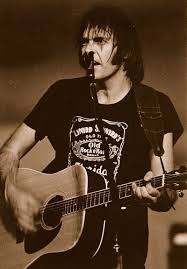
Neil Young wearing a Lynyrd Skynyrd t-shirt.

Neil Young wearing a Lynyrd Skynyrd t-shirt.

Much like the Confederate flag, “Sweet Home Alabama” has a complicated history and has different meanings for different people.  That the song has confounded generations of people is surprising, but perhaps the death of song’s chief architects explains why the song’s obtuse meaning has remained a bit of a secret for so long. Worth noting, in 2009 the State of Alabama started using the phrase “sweet home Alabama” on its license plates.  Given that both potential readings of the song are generally unflattering to Alabama, one wonders why the song would be used on anything official from the State.  It’s impossible to know the inner workings of other men’s hearts, but based on “Sweet Home Alabama” I wouldn’t characterize Lynyrd Skynyrd as racists. The band members grew up in another era, I’m sure they had some degree of prejudice (which everyone has to some extent). That said, for a band making millions of dollars off a Southern image, I think the band had a progressive attitude when it came to the subject of race.  A large part of the band’s attitude, no doubt, stemmed from their love of music—specifically blues music. Consider this the next time someone dismisses popular music as “unimportant.”

Tagged , , , , , , ,

“Grass” by XTC

“It would shock you, too/the things we used to do on grass…”

Though Andy Partridge is the lead-mad genius of British New Wave rocker XTC, my all-time favorite song by the band was written and sung by Colin Moulding.  The lighthearted, easygoing bassist was very much the McCartney in XTC.  His songs are guided more by the heart than the more cerebral, neurotic songs written by Partridge.  Of the two, Moulding is very much the one who comes across as an average bloke, the sort of guy you could have a beer with down at the pub.  That’s not to say Moulding was incapable to complex, witty, psychedelic numbers like Partridge.

xtc-grass-virgin

Moulding’s song “Grass” off the band’s 1986 album SKYLARKING is my favorite XTC song for a couple of reasons. For one, its surreal, psychedelic sweep is beyond splendid. The song opens with a sweeping string arrangement and chirping bird sounds (the album does anyway, the single version doesn’t have the sound effects). Lyrically, the song is both about having sex in a field and having sex while under the influence of marijuana.  The song is loaded with delightful double-entrees that are cute and not skeevy like I’m making it sound.  While it’s by no means high poetry, I’ve always enjoyed the cheeky, very British, wordplay of “Grass.”

“Grass” was written and recorded in the late 1980’s, at a time when it was pretty uncool to like The Beatles. Sure, there were bands like Tears For Fears mining The Beatles pop territory, but it was done in a most un-Beatle way. “Grass” was a desperate stab at a much-needed American hit single.  The song got XTC a hit in the States, but not in the way the band predicted: DJ’s ignored “Grass” and made the song’s b-side “Dear God” a surprise hit instead.  Produced by super-producer Todd Rundgren, the song never got it’s due in my opinion.  I think “Dear God” is a very good song, but by no means as representative of XTC and what the band stood for as “Grass.”

A great way to start Spring, enjoy “Grass”:

Tagged , , , , , , , , ,

“Walk Out To Winter” by Aztec Camera

Scottish rockers Aztec Camera are one of those bands that I came to really late. When I say that, I don’t mean that it was 1989 or 1995 when I started listening to them…it was about 2 years ago.  I discovered them in, of all places, a J.C. Penny Outlet store.  I was waiting around near the changing rooms, waiting for my wife and amid the terrible, terrible lite jazz and boring adult contemporary I heard “Walk Out To Winter.”

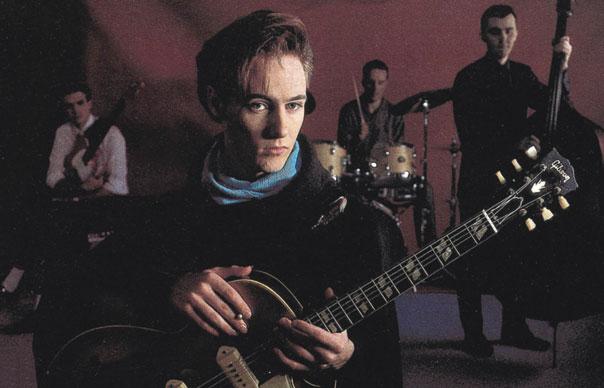
Aztec Camera band

Aztec Camera about to take a snappy.

The song’s production is pretty dated, but delightfully New Wave-ish enough to save itself from being totally unlistenable.  Roddy Frame, the mad genius behind Aztec Camera, comes off just earnest enough: any less would be boring, any more would be embarrassing. I first thought I was hearing a really early Morrissey/The Smiths song, only because Frame’s voice has that beefy timber that’s similar to the Moz.

I was disappointed to find that HIGH LAND, HIGH RAIN, the band’s 1983 debut album, was a little hard to come by. But rejoice! This April will mark the 31th anniversary of the album’s release, and to celebrate Domino Records is putting out a remastered double-CD edition of the album. I got my copy in the cut-out bin of my local record shop, but I’m tempted to pick this one up.  HIGH LAND, HIGH RAIN is a fantastic record top to bottom. The single “Oblivious” is probably the album’s most notable track, but I really dig “Walk Out To Winter.”

I woke up this morning to a freshly fallen winter wonderland myself, and this song was playing in my head. If you haven’t checked out Aztec Camera, don’t feel bad just get with it and seek out HIGH LAND, HIGH RAIN.

Tagged , , , ,

Dire Straits “Money For Nothing”

Now that I don’t have Spotify, I’ve been forced to return to my expansive CD collection.  One of those shiny, shiny discs, was a copy of Dire Straits 1985 album BROTHERS IN ARMS.  It’s the band’s most famous, best-selling albums.  I hadn’t heard it all the way through in a while and when I recently re-listened to it, I was astounded that the first three songs were all singles.  The album’s also really long, the songs are lengthy but none of them feel overly long.  That’s something that’s kinda lost in this age of ADD-riddled post-MTV age.

Speaking of MTV, I’m still completely blown away by “Money For Nothing.”  Talk about a song that wouldn’t work today, where to begin: I love that Sting is on this track.  I love the sentiment, the commentary on music videos and the perception of being a musician.  I love that guitar riff, man is that a million dollar riff! And the best part? That super-meta video with the primitive CGI.  I feel so blessed to have had young parents that were into MTV during it’s initial hey-day. I remember seeing this video, not when it first came out mind you (I’m not THAT old), and being really wowed by the visuals.

Dire Straits Brothers in Arms cover

Mark Knopfler is such an amazing talent, I think I prefer his solo stuff to Dire Straits, but BROTHERS IN ARMS is a damn fine album.

Yeah buddy, that’s his own hair.

Tagged , , , ,

“Go” by Valley Lodge

The postings have kinda fallen off here at Defending Axl Rose, and for that I’m sorry.  I’ve been busy working a new job, tinkering with a novel I started writing in January, and writing concert previews for a Colorado fashion/culture webzine, 303 Magazine.

But fear not, despite a fuller-than-usual plate, I have been rocking out to new music.  I was recently turned onto Valley Lodge, a delightfully crunchy power-pop outfit out of New York.  Their latest album, USE YOUR WEAPONS, is in heavy rotation here at the D.A.R. compound.  The first track “Go” is ridiculous and ridiculously good.  Seriously, I defy you to hear this song and not smile…and tap your foot.

valleylodge_band

I plan on writing a full album review this weekend, but in the meantime, why not get the jump on all your friends and get familiar with Valley Lodge? This is serious power-pop for pop-loving people.

Tagged , ,

METAL MONDAY: “If You Have Ghosts” by Ghost

I shan’t lie, I’m a huge fan of Swedish heavy metal rockers Ghost (now called Ghost B.C. but whatever).  I love their larger-than-life Satan worshiping antics and their sweeping Blue Oyster Cult-vibe.  Most of their tunes have a dark heart, and while I dig that about them, I can’t help but love their earnest (dare I say, sweet?) cover of Roky Erickson’s “If You Have Ghosts.”

ghostep600

Stirring strings? Silky smooth vocals? Killer guitar? Check. Check. And check. This song kicks so much ass.  And Dave Grohl on rhythm guitar is there to add a badass cherry on this hard rock sundae.

“If You Have Ghosts” appears on a recently released EP of the same title, like the band’s prior full length LP’s its is highly recommended.


Also, I’m super stoked because Ghost is embarking on a North American tour that will include a city near me! I can’t wait to see them.

Tagged , , , , , , , , , , ,

“Valentine” by The Replacements

“If you were a pill, I’d take a handful at my will/And knock you back with something sweet and strong.”

Paul Westerberg perfectly captures the sleazy hopelessness of young, desperate love in “Valentine.”  The song was recorded by The Replacements for their 1987 album PLEASED TO MEET ME, and pretty much the only V-Day song I’m going to be listening to today. The song’s opening lines, in which a star wished upon turns out to just be an airplane tells you everything you need to know about this song.  I wouldn’t call Westerberg unsentimental, I’d just call him a realist.  Love’s a drug and we’re all junkies. 

These guys KNOW what love's really all about.

These guys KNOW what love’s really all about.

Valentine’s Day is just like all the other holidays: a good idea twisted into an excuse for people to spend money they don’t have. Take time to think about all the love you’ve had and currently have, but don’t buy a fucking greeting card.

Tagged , , , , ,

Beatles For Sale: My Rant Against The American Reissued Beatle Albums

Last month The Beatles American albums were re-issued in a large, expensive boxset. Back in 2009, when the remastered CD’s were issued, I gladly handed over my hard-earned currency for better packaging and most importantly, higher sound quality. While no doubt an opportunity to get my money again, the remastered Beatles albums gave me something I didn’t already have: better sound.  The sound quality, especially on the first few albums was vastly superior. Rather than shitty fake stereo mixes, fans were given pure mono as God, and George Martin, had intended.

"All you need is ca$h"-The Rutles

“All you need is ca$h”-The Rutles

These American re-issues are another story altogether. As far as I’m concerned, this is a disgusting money-grab with no redemptive quality for fans. The Beatles so-called American catalog exists because of corporate greed, which is the same motivating factor behind that bastardization’s re-issue. For those of you unfamiliar with what happened to the Fab Four’s albums in America, buckle-up because it’s gonna be a bumpy ride.

In 1963, after failing to break into the US, The Beatles were poised to finally conquer the Yankees. Capitol Records, the American counterpart to the band’s UK label EMI, was sitting on small pile of Beatle records. Rather than do the logical thing (i.e. issue the albums as they had been issued in England), Capitol decided to issue all new albums. Instead of releasing albums with 14 songs, as they’d done in England, The Beatles American albums were comprised of 12 songs.  And instead of simply cutting the number of songs down, the songs were swapped around in a confusing jumble.

Another major issue was The Beatles singles. In England it was considered bad form to sell people one song twice, so any song issued as a single was never included on major albums. Thus, songs like “She Loves You” and “I Want To Hold Your Hand” were never included on any British Beatles album.  Since this was not the practice in the US, Capitol Records reconfigured the American Beatle albums to include the band’s popular hit singles.

Further clouding the waters, a small independent label called Vee-Jay had the American rights to the band’s first album from 1963 to 1964. Vee-Jay got the rights to this material after Capitol Records initially passed on the Beatles in America. Thus, the band’s album PLEASE PLEASE ME was being circulated prior to Capitol’s involvement as INTRODUCING…THE BEATLES.

That’s how the American Beatles catalog got so messed up. This is how we got records like THE BEATLES IV which contains songs from BEATLES FOR SALE, HELP!, and music from the “Ticket To Ride” single. All of the Beatles records up to 1967’s SGT. PEPPER’S LONELY HEART’S CLUB BAND are a confusing mosaic of the band’s British output. The madness (mostly) ended with SGT. PEPPER due to the band’s insistence that their albums appear the same everywhere due to the artistic vision they had for that album’s concept.

usa_beatles-vi

The American albums became something of a footnote when they were abandoned completely in the 1980’s when the band’s albums were first put onto CD. Were American fans puzzled when the British albums were released digitally? I’m sure they were, but that was decades ago. In the meantime, people like myself grew up only knowing the proper British albums. Which brings me back to the American reissued albums: who is this supposed to appeal to? Who is supposed to be forking over their money for these? Older fans who might actually remember these albums have by now long adapted to the British releases. Younger fans have never known anything but the British albums. And at this juncture in history, I think it’s safe to say that the vast majority of Beatle fans who wish to own the band’s music already do…and anyone buying the band’s records for the first time would surely buy the recognizable, iconic, British albums.

It felt strange rebuying the albums in 2009, but at least I was getting something new with the improved fidelity. But let’s be honest, the 2009 remasters were a double-dip, plain and simple.  So if the 2009 digital remasters, which I’d argue are worth the money, were a double-dip then these American reissued albums are a triple-dip. This is a product aimed squarely at the hardcore Beatle fan, the one that has to own everything with the band’s name on it.  This is a product meant to be purchased and placed on a shelf still in it’s plastic wrap.

Perhaps if I had the money, and the inclination to continue hoarding physical media, I would fall into that camp/trap. But alas, an 800 mile-cross-country move has changed the way I look at money and the owning of material goods. With this American albums reissue, The Beatles have crossed over into the horrible George Lucas/Star Wars money-grab territory.

I’m a Beatles super-fan, I’ve owned multiple copies of each of these records. Hell, I’ve owned LET IT BE in four different formats (cassette tape, vinyl LP, original CD, remastered CD).  But even as a superfan, I can see no reason to own these reissued American releases.  I don’t need different, less-iconic artwork and a swapped around track listing. In short, I don’t need these albums. I never knew them and I don’t feel it necessary to start now.

This reissue ruffles my feathers because it smacks of desperation—the last act of a band with nothing left to sell me. But that’s not true, there is one thing I’d love to buy from The Beatles. One thing that I’ve never experienced that the band continues to deny me. I speak of the lost documentary Let It Be, the legendary film the band made while writing and recording LET IT BE the album. I’ve never seen this footage, largely because it captures the breakup of the band and paints the musicians in a less-than-favorable light.

I understand that I have capitalism to thank for my Beatles albums, and that their corporate masters have every right to keep selling the same material from now until doomsday. But I wish they’d exhaust the vaults completely before they just pump out the same material over and over.

Tagged , , , , , , , , , , , , , , , , , ,

“What You Do To Me”: Potent, Perfect Power Pop!

It wasn’t until the mid-1990’s that power pop entered my life*.   Growing up listening to 60’s era British Invasion rock bands I was primed to love love power pop.  The genre with its reverence to that period of rock music struck a major nerve with me.  Essentially a cleaner, modern continuation of British Invasion rock, power pop is a big licks and killer hooks.  Its tons of fun without being sticky bubblegum, loud but lacking a hard edge, power pop is pop music on steroids.
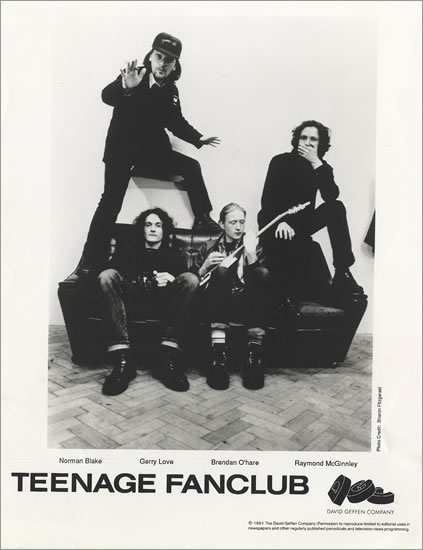
Perfect Power Pop People!

Perfect Power Pop People!

There are plenty of great power pop bands, both of yesteryear and today, but none of them can match Teenage Fanclub for purity.  Many bands skirt the edges of power pop, but Teenage Fanclub are 100% pure, uncut power pop.  Seriously, if you’ve never listened to power pop you’d be wise to start by listening to half a Teenage Fanclub song…or cut it with baby formula.  At the risk of sending potential power poppers into overdoses, I’d recommend you start with “What You Do To Me.”  The world is full of pop songs, but “What You Do To Me” is in a class all by itself.

The song dwells innocently enough on the band’s third album, BANDWAGONESQUE, which was released in 1991.  A bare bones, almost ludicrously simple love song, “What You Do To Me” is two minutes and one second of bliss.  The song has a great, crunchy guitar riff and a lyrically hook that comprises 98% of the song. It’s the kind of song you listen to and say “I could write this stuff!” because Teenage Fanclub makes it look that easy.  But it’s not that easy, or everyone would be doing it, right?  I think that effortlessness is what separates the  great from truly amazing. And Teenage Fanclub are truly amazing.

Teenage Fanclub

The song is basic its brevity manages to keeps it from being overly repetitive, achieving a miraculously high level of infectiousness while managing to avoid being tiresome.  With “What You Do To Me,” Teenage Fanclub captures the soaring wonder of love with none icky, complicated stuff like heartbreak.  Even though it’s from 1991, the song sounds like it could have been recorded yesterday.  And yet, I don’t think it would sound out of place on The Beatles first album, MEET THE BEATLES.

All of BANDWAGONESQUE is amazing, potent power pop, but the album’s crowning glory is “What You Do To Me.”  One listen, and you’ll have it in your head all day.

*Yes, I’m going to keep referencing Jellyfish until you give up and give them a listen. 
Tagged , , , , , , , , ,

DEFENDING AXL ROSE: Part 2 “Shackler’s Revenge”

Welcome to part two of a fourteen part series in which I go track-by-track through CHINESE DEMOCRACY. It’s been over two years since I did the first installment on the first song…but I’m back defending Axl Rose!

I’d heard several songs off CHINESE DEMOCRACY prior to the album’s official November 2008 release, but “Shackler’s Revenge” was the first officially-Axl-sanctioned track I heard. The song was previewed in the Harmonix rhythm game Rock Band 2, which came out a month before CHINESE DEMOCRACY was released. I remember playing the game for hours the day it came out trying to unlock the song. When I finally got a chance to play “Shackler’s Revenge” I was pretty disappointed. Unlike the rough leaked tracks I’d heard, “Shackler’s Revenge” had a gritty industrial feel. I was also taken aback by the song’s production, which was busier than most hard rock songs. This negative reaction was repeated when I bought the album a month later.

For the record: not my score, not my Xbox ID, and not screen cap.

For the record: not my score, not my Xbox ID, and not screen cap.

Five years and many listens later, I like “Shackler’s Revenge” much more than I did when I first heard it in Rock Band. That said, this track is probably the most over-stuffed/produced track on the album. Everything about “Shackler’s Revenge” is big. The song has the most credited writers of any song on the album (five in case you were wondering). The song has multiple guitar solos and multiple guitarists. And despite this largeness, the song is the second shortest track on the record, clocking in at three and a half-minutes in length.

The track is an epic, aggressive romp through burning fields of an apocalyptic hard rock landscape. The song might not have struck me as very Guns N’ Roses-like the first time I heard it, but “Shackler’s Revenge” actually has all the main ingredients of a great GNR song. The song features lead and backing vocals from Axl, where are layered on multiple tracks creating a creepy Axl-choir. “Shackler’s Revenge” is angry and defiant with an absolute killer chorus that seems to wag a finger at all of Axl’s doubters.

GNR’s songs are also known for their guitar and “Shackler’s Revenge” does not disappoint on this end. The song features interesting guitar work from the avant-garde guitarist Buckethead and the band’s other guitarist Bumblefoot. I’m not 100% sure which one of these guitarists did the solos, but they’re fantastically explosive. I also really like the dying Galaga machine-like quality of the guitar tone.

The song’s dark, apocalyptic nature recalls the band’s previous “Oh My God.” That track, which came out on the END OF DAYS soundtrack in 1999, almost seems like a proto-“Shackler’s Revenge.” Axl has publically stated that “Oh My God” was released unfinished due to time constraints relating to the release of the film End of Days. A comparison of the two tracks is a fascinating: both have an aggressive, industrial metal feel but whereas “Oh My God” seems to be an endless gushing rant, “Shackler’s Revenge” has a methodical, demonic groove. The more refined “Shackler’s Revenge” is a testament to Axl’s tireless perfectionism. I’m not a big fan of sub-genre that the song mines, but the song has grown on me over the years. That said, releasing “Shackler’s Revenge” as the album’s first single was probably a mistake. From a business perspective, it makes sense to release the shorter more dynamic track but for my money the album’s third track “Better” would have made a better single (pun intended.

But I’ll write more about that when in the next installment of my track-by-track review of CHINESE DEMOCRACY.

Tagged , , , , , , , , , , , , , , ,