This week marks the return of METAL MONDAY. I’ve got a lengthy list of bands I plan on featuring in upcoming METAL MONDAY posts, but today I want to spotlight Kraptor.
Hailing from Venezuela, Kraptor are an awesome thrash metal band. What I like about Kraptor is the band’s above-average musicianship and sense of humor. Kraptor know how to play their instruments but avoid that cold, sterile sound many wanna-be-virtuosos usually crank out. The band has a tight, professional sound but don’t take themselves too seriously. I love a metal band that can play their instruments but are also unafraid to be fun.
Kraptor, don’t they look fun?
The band’s sense of humor is refreshing in a genre filled with deathly serious/super angry bands. Kraptor’s album, NIGHT OF THE LIVING DEAD, is a thrash metal concept album that spoofs B-movie horror movies but still manages to knock you socks off. The killer cuts are interspersed with short newsbreaks reporting on the chaos caused by a plague of zombies.
While this ain’t Romero’s NIGHT OF THE LIVING DEAD, Kraptor’s album works for me thanks in large part to the juxtaposition of the melodic yet muscular tunes and hilarious zombie-outbreak story.
One of the true joys of being obsessed with music is the endless hunt for one’s next favorite song. This chase for new bands and songs is what keeps me going. People think I actively seek out obscure bands and songs because I’m a snob—but really I just ran out of mainstream stuff. It’s rare that I’ll hear something on the radio and not know what I’m hearing. When it happens, I get really excited and I feel like a desert wanderer who has just spotted an oasis.
I was driving to work when I heard a song on the radio that I’d never heard before. It sounded like a live Bob Marley & The Wailers track. This was at 7:09am on the morning of September 27, 2013. I know this because I did what I always do when I hear something unknown: I took out my phone and used the Shazam app. Shazam is probably my all-time favorite app, it’s great because it saves nerds like me from falling in love with a song and then never getting to hear it again.
I used the app and Shazam tells me that the song is called “Hooligan” and is taken from an album titled ONE LOVE AT STUDIO ONE. This album contains some of the earliest Bob Marley material available, which explains why I vaguely recognized Marley’s vocals but not the song. I liked “Hooligan” so I went on Spotify to see if the track was available. The ONE LOVE AT STUDIO ONE album was not on Spotify, but “Hooligan” was available on a reggae compilation titled ORIGINAL SKA. By the time I’d done this, I was sitting in the parking lot of my office building, so I bookmarked the album and went inside.
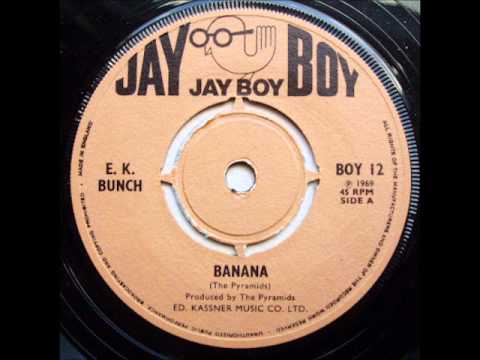
Later that day on the way home I fired up Spotify and gave “Hooligan” a listen. The track didn’t really move me the way it did earlier in the day. It was probably a different version than what I heard on the radio. Regardless, I let the compilation play and discovered it contained a pretty good cover of “Son of a Preacher Man” by a band called The Gaylettes. The sound quality was terrible, but the vibe on the track blew me away. I got home and eyed the list of songs on ORIGINAL SKA. One track stood out among all the others: “Banana.” A reggae song called “Banana,” how cool was that? My mind reeled with the possibilities. Life is full of letdowns, and I’ve learned that very little ever lives up to our expectations. Still, I had to hear this song because it had such an interesting title. I figured the song would give me a chuckle and I’d move on with my life. Instead, I stumbled onto an incredibly awesome song with a murky, mysterious past.
Rather than being the depressing banana-picking song I had expected, “Banana” is a joyous ode to everyone’s favorite elongated, yellow fruit. It’s lighthearted, fun, and has a tremendous amount of charm. I played the song over and over for a few minutes, grinning from ear to ear like a moron. “Banana” is an awesome song that I truly love. I know I love it because I can’t rationally explain my affection for it.
I played the song for my wife and the members of my family, everyone who heard it liked it. “Banana” and it’s goofy lyrics even became a kind of shorthand between my and one of my sisters. I began texting them pictures of myself eating a banana with the caption “Everybody like it!” a lyric from the song. For most people, the story would end there: I found a really cool, obscure reggae song that cheers everybody up…The End. But being the songhound that I am, I couldn’t just stop there. I had to know was there more where this came from? Did the genius that cooked up “Banana” have a really great song about blintzes? I started by looking at ORIGINAL SKA which attributes “Banana” to an artist named E.K. Bunch. I did the logical thing, I clicked over to see what other songs E.K. Bunch had available on Spotify. But this proved to be a dead-end; there was only “Banana.”
I was confident that Google would provide more clues, so I searched E.K. Bunch “Banana” song. I was directed to a couple of videos where the people had recorded the song off their old 45 copies, but there was little else. Interestingly, I noticed that the song was often attributed to E.K. Bunch/The Pyramids. This was my first clue to the origin of “Banana.” But information proved to be scare on The Pyramids, so I kept listening to “Banana” and put the search for its source on hold. I didn’t give up per say, life just got in the way: I moved 800 miles away from my home in St. Louis and Thanksgiving happened. This week, however, I found myself in a strange city with no job but with lots of time on my hands. So I decided to get to the bottom of the E.K. Bunch mystery.
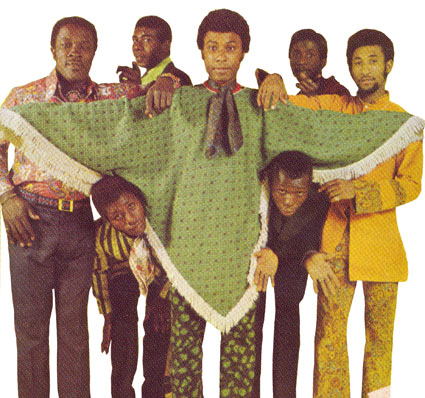
A visit to the Trojan Records website explained why tracking down “Banana” was so difficult: it turns out the band behind the song went by a bunch of names (pun intended). They were The Bees, Seven Letters, The Pyramids, E.K. Bunch, Zubaba, and Symarip. That last name, Symarip, was the key to blowing the lid off the entire “Banana” mystery. Having gained a majority of their fame as Symarip, this band name is the catch-all for the others. The band started out as The Bees and was formed in the 1960s by Michael Thomas and Frank Pitter who were of West Indian descent and lived in the United Kingdom. Eventually, The Bees added members and moved to Germany.
The band became Zubaba then The Pyramids and then ended up switching labels due to a dispute and wound up unable to use their name. Someone in the band decided to change their name to Pyramid spelled backwards…minus the letter ‘d.’ Somehow this name, probably with the help of a mystical herb, morphed into Symarip. This became the name they released and re-issued their songs under. Once I had all this figured out, I went back on Spotify and found a really cool live version of “Banana” on an album titled MOONSTOMPIN’ AT CLUB SKA.
While browsing the band’s Spotify page, I noticed that Symarip had a ton of songs about skinheads. I even realized, upon re-listening to “Banana,” that skinheads are mentioned in the song! How had I missed this earlier? I was shocked and worried. I was shocked because in the United States, and unfortunately most of the world today, the term skinhead has a very negative connotation. I was worried because it appeared on the surface that my new favorite song was racists!
Apparently the term skinhead has changed meaning over the years thanks in large part to a few bad apples. The skinhead movement began in the 1950s in the UK. At that time, a skinhead was basically a kid that wore work boots and jeans and liked American R&B music. These kids got together in dance halls and listened to ska and reggae music—which is why Symarip has a ton of songs devoted to skinheads. Eventually some of the skinheads became violent in the late 1960s and the term became associated with the White Power Movement in Europe.
It’s amazing to me that a chance encounter with a really old Bob Marley song led me down a path ending with the White Power Movement. This is the amazing part of being a music geek, the discovery not only of old music…but of the past itself. Maybe I get a bigger kick out of this sort of thing because I was briefly a history major in college, I don’t know. What I do know is that I love falling down the rabbit hole into obscure music and learning all these strange tidbits of trivia.
CASE CLOSED: “Banana” is an awesome song, dashed off by an obscure reggae band that changed its name multiple times. The first thing that you should do is go and listen to the song. Then listen to it again and again, dance if necessary. Then visit Trojan records website and read the entire history of The Pyramids.
It’s not often, but sometimes a song hits you at the exact right moment in your life. As a fat, midwestern schlub writing music reviews on his Axl Rose-themed blog, Resistor’s “Vincent Van Gough” struck a nerve. I guess what I’m trying to say is: please take this review with a grain of (rock) salt, because this song got my number in a big, big way.
“Fame: Is it any wonder I reject you first?”
Resistor is synthpop band languishing in obscurity that is poised to release their first album…soon-ish. The album’s single/central thesis is “Vincent Van Gough.” The song is a tongue-in-cheek look at fame starvation in the Internet age. The song is an anthem for all those lonely Brony’s trying, and failing, to achieve fame online: like I said, it hit close to home for me.
Synthesizers have always fascinated me, so Resistor’s synth-chic rubbed me the right way. Lyrically the song has a very Ray Davies cheery-but-dark sensibility that plays well against the bouncy, upbeat synth accompaniment. The song gleefully name-checks a bunch of really talent people who didn’t achieve fame until after their death (hence the song’s title). I particularly loved the chorus, “I always heard, if you build it they’ll come, but if that doesn’t work, you can always try dying young.” Every time I hear those lines I smile but also involuntarily wince. Fame’s a bitch.
Barbeques, pool parties, hot chicks, cool dudes and everything in between: welcome to the world of New Fad Zoo. The Atlanta-based rap group’s second album, FERAL II: WILDLIFE, is another trip down the rabbit hole of expertly crafted music. Just like on their 2011 debut record, New Fad Zoo blur the lines of genre. The band expertly marries thoughtful, sometimes funny, lyrics with top-notch musicality. These guys can do it all: write catchy hooks, pivot from jesting to serious philosophical musing, and create a musically diverse album.
I was initially skeptical when I saw that band had chosen to name their second album FERAL II. The idea of sequels, in any media, usually conjures thoughts of desperate cash-ins and creative bankruptcy. Fortunately, FERAL II: WILDLIFE takes the focus and energy of FERAL and expands upon what New Fad Zoo has already done. Not only did the band avoid the dreaded sophomore slump, but they managed to surpass their first record in every respect.
The delightfully cheeky album opener “Party Animals” asserts dominance over the listener with its funky groove and big cat growl. New Fad Zoo tosses this goodtime party song off effortlessly, as if writing a fun song were breathing. The moody “Strobe Lights” explores the darker side of love and the desire for fame and has a hauntingly cold, electronic sound that recalls Kanye West’s 808s AND HEARTBREAKS. Meanwhile the album closer “You Are Loved” is a tender ballad that manages to combine late 1980’s Billy Joel and Outcast (and that’s a good thing). Any band would be lucky to master one style, New Fad Zoo is adept at all three: modern party song, moody electronic rap, and classic R&B.
FERAL II presents the listener with the complicated worldview of talented young men. The band’s attitude towards drugs, alcohol, and women schizophrenically seesaws over the course of the album. Like all good heroes, the boys of New Fad Zoo are complicated–sometimes falling into the trap of objectifying women yet also acknowledging on the track “Triangle” that: “if I had a daughter, I’d surely be pissed if a nigga dared harmed her, but that’s the world we be living in.” The song interestingly asserts that there are three groups in the battle of the sexes: Men, Women, and Bitches. The song’s hook is sung by the angelic Melanie Annabelle who proclaims, “Women hate bitches, bitches hate men, men want the bitches, and women want men.” New Fad Zoo don’t pass judgment other than to point out that “it’s a fucked up world.” Indeed.
New Fad Zoo’s first album had what I proclaimed to be a billion dollar single with “Love Is Wild.” That song sadly failed to get snatched up by Madison Avenue ad executives or the numbskulls at Clear Channel. I foolishly didn’t think they boys had it in them to craft another perfect single, but once again they surprised me and minted another $1B song: “Luv Is.” The hauntingly beautiful hook, provided by Melanie Annabelle, and the awesome Beatles shout-out sold me on the song. After listening to “Luv Is” a dozen times I’m confident in saying that this is the best song not on the radio today.
It’s easy to gush about FERAL II: WILDLIFE because like its predecessor, the album is the clear result of what happens when talent people pour their hearts out into their work. There isn’t a single track that feels dashed off or undercooked. New Fad Zoo clearly loves crafting, not just making, music and it shows. No track sums this up like “Want It So Bad.” Part inspirational anthem, part pep-talk to themselves, “Want It So Bad” is the answer to the question of whether or not there will be a third New Fad Zoo album–and I can’t wait.
British crooner, and former Smiths singer, Morrissey released a live cover of Lou Reed’s “Satellite of Love” today. The song was apparently recorded two years ago in Las Vegas, but is just now being released to no doubt honor the recently deceased Velvet Underground member. That, and the Moz also has an audio book coming out this week, but I’m sure that’s just a coincidence. Even if it is a bit of a gimmicky-marketing release, the cover is really good.
I’m probably gonna catch a lot of hell for this but: I’m not a big Lou Reed fan. He has a couple of really good songs, but overall I think he’s a bit overrated. That said, I think that Reed’s songs work best when he’s being covered (I call this the Bob Dylan-effect). Morrissey brings his usual charm and almost embarrassingly earnestness to the song, which increases my appreciation of “Satellite of Love.” In fact, if I hadn’t just re-listened to Reed’s TRANSFORMER I’d have sweared this was an original song.
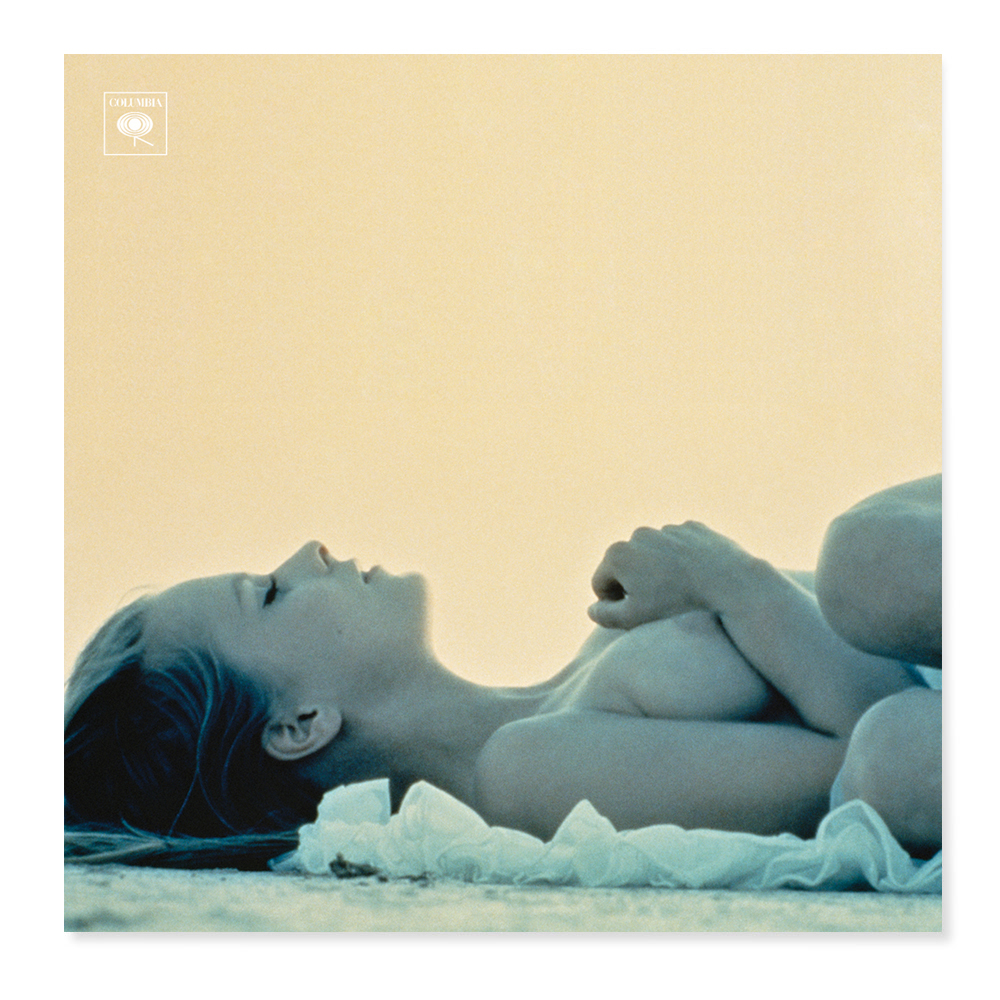
Beady Eye, the gutted remains of what used to be the Brit-Pop band Oasis, put out their second album this week. Beady Eye’s first record, DIFFERENT GEAR, STILL SPEEDING was Liam Gallagher’s confident blast of bravado and proof that he could hold his own without his brother Noel. Back in 2012 I proclaimed 2011 to be “The Year of The Battling Gallagher Brothers.” Liam was the first of the Gallagher brothers to release a post-Oasis record and ultimately I felt his Beady Eye record was better than Noel’s strangely titled High Flying Birds record.
Fast forward to 2013, and my expectations were high as I fired up BE. Would Liam be able to deliver another stellar album or would Noel’s absence be more fully felt? My first impression was that BE was closer to the denser, mid-period Oasis albums like HEATHEN CHEMISTRY and STANDING ON THE SHOULDERS OF GIANTS. I love both of those records, but they took a couple of listens before I found myself singing along. Similarly, BE lacks the big hooks of early Oasis. Also toned-down is the usual Beatles-influence.
BE has a spacey, almost distant quality that frankly took me by surprise. There are definite tempo changes throughout the record, but everything sounds quieter and more subdued that DIFFERENT GEAR , STILL SPEEDING. Standout tracks include the Lennon-esque “Iz Rite” and the quiet, dare I say introspective “Soon Come Tomorrow.”
The album has songs that should be rockers, like the third track “Face The Crowd,” but nothing on BE takes off like on Beady Eye’s first album. So initially I was a bit underwhelmed by BE’s low-key shift, but after a few spins I warmed to the album. BE feels like a transitional album for Beady Eye. On one hand, I’m a little sad Liam isn’t just doing Oasis 2.0 music…but on the other hand I’m glad he’s branching out into new territory—even if he that means we don’t get a few less raucous rockers.
I would be remiss, however, if I didn’t address BE’s most interesting song: “Don’t Brother Me.” This is the song all of us Oasis fans have been waiting for—the one in which one of the Gallagher brother’s waves a white flag. With lyrics like, “In the morning/I’ve been calling, I’m hoping you understand/All and nothing, I’ll keep pushing/Come on now, give peace a chance, take my hand, be a man” this is song is 100% aimed at Noel. I know what it’s like to have a tempestuous relationship with a sibling, someone who you can both deeply love and feel tremendous anger towards. “Don’t Brother Me” probably isn’t going to mend any Gallagher family fences (Liam sings about being sick of “your lying, skimming, and you crying”) but it’s a start.
The worst thing I could say about BE (and actually I did this during much of Noel’s HIGH FLYING BIRDS) is that during most of the songs I found myself singing the chorus of “Fade Away” that ultimate-classic of an Oasis song: “While we’re living, the dreams we had as children fade away…”
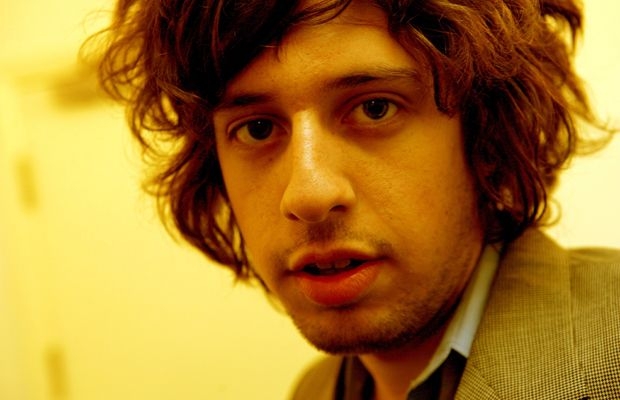
Sometimes all it takes is one song to make me a fan. Adam Green, formerly of the Mold Peaches, managed to earn my undying affection on his 2006 solo record Jacket Full of Danger with the song “Novotel.” A quirky word-salad sung in the style of a demented (drugged out?) lounge act, “Novotel” has it all: Toothy Mennonites, Teddyboys, women in the factory. Clocking in at one minute and forty seconds, “Novotel” is wall-to-wall crazy. And I love every second of it.
But the best part is when Green proclaims he’s smoking crack…like Isaac Asimov. It’s such a wacky, out-there thing to sing. The lyric is delightfully whimsical, yet wonderfully vulgar. I thought I’d shuffle off this mortal coil without hearing someone compare their crack consumption to Isaac Asimov’s. Adam Green proved I was wrong.
“Novotel” is a fantastic evergreen of a song: I fell in love with “Novotel” the first time I heard it six years ago, and it still gets me gets me today. I’ve tired sharing this song with various friends/acquaintances over the years, and nobody ever likes it. Green’s talky-singing style and his “is this guy for real?” delivery of ludicrous lyrics makes Jacket Full of Danger not everyone’s cup of tea*. But for me the album, and “Novotel” in particular, an absolute delight.
Oh, he’s not serious…is he?
*On the song “Hey Dude” Green proclaims that, “Bob Dylan was a vegetable’s wife!”
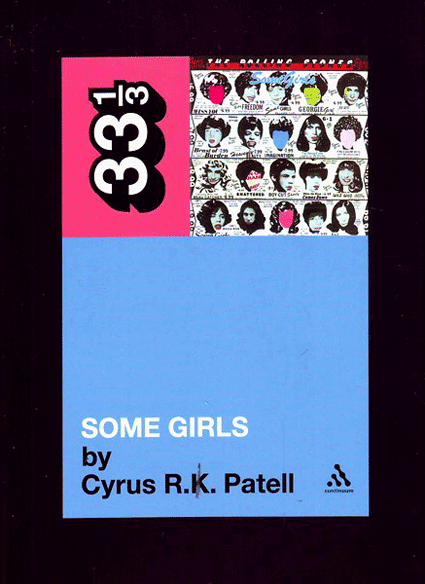
I recently finished Cyrus Patell’s book on The Rolling Stones 1978 album SOME GIRLS. Patell’s book is part of the 33 1/3 series, which for those of you unfamiliar, are short little books written by one author and are dedicated to one classic album. It’s basically a long-form version of my Classic Albums Revisited posts, which I once did on this very album. This is the third or fourth book in the series that I’ve read, though currently there are 80+ books in the series. The 33 1/3 series covers more than just classic rock, there are rap, metal, and country albums in the series as well.
The books cover the behind-the-scenes/making of-aspect of the albums in addition to providing a track-by-track analysis. Typically the book will be constructed around a theme of some sort, and of the small sample I’ve read, include a personal story from the author’s life. Patell’s book on Some Girls is built around the conceit that The Stones record is basically all a love-letter (of sorts) to the late 1970s version of New York City. Most but not all of the songs, Patell points out, are in some way about New York. It’s pretty obvious, but strangely enough I never really made that connection.
Some Girls also is structured around Patell’s childhood in New York, around the time of the album’s initial release. The death of one of his beloved teachers, the author’s first brush with death, plays a pivotal part of the first few and last chapters of the book. Although I did find it interesting, I almost wish Patell had just stuck to The Rolling Stones. Had this book been a typical long format book I wouldn’t have had as much of a problem with Patell’s personal connection to the record—but Some Girls (like all the books in the series) is a very short, very compact book. I had a similar issue with the series entry on PET SOUNDS, but unlike that book, I walked away enjoying Some Girls.
My enjoyment of Patell’s book is two fold: he provides an excellent history of the band and the band’s efforts to record SOME GIRLS while at the same time giving a great history of late 1970’s New York. He doesn’t just tell us that “Miss You” was written as a nod to the current disco culture, he explains to us that Mick Jagger and company were hanging out the infamous Studio 54. Then Patell proceeds to give us a brief, but informative history of the club. Patell’s deft ability to balance band history and history-history is what makes Some Girls such an enjoyable read.
There was one minor annoyance that almost got me to stop reading the book, and that was the author’s reliance on Keith Richards memoir Life. At the start of the book there were so many long quotes taken directly fromKeith’s book that I nearly put the book down because it seemed like I was basically re-reading Life. Thankfully, once the author turns away from basic band history and starts discussing the album in detail these direct quotes from Life are less intrusive. Look, I get it, Patell wasn’t able to actually talk with Keith Richards…but some of the quotes are ridiculously long, taking up damn near an entire page. I’m glad I didn’t give up on Patell’s book because it really is a good read.
Even if, like me, you’ve read five or six books on The Rolling Stones you should still check out Some Girls. Patell’s analysis of the songs both lyrically and musically (he gets pretty deep into chords and tuning) is worth a read. If like me you’re a big fan of SOME GIRLS you owe it to yourself to check out Patell’s book, it’s a quick but insightful read.
A few weeks back I heard a really great interview of Electric Light Orchestra frontman/genius Jeff Lynne on Adam Carolla’s daily podcast. It’s really rare that anyone hears from Lynne these days, so if you’re an ELO fan you owe it to yourself to give it a listen. I’d never heard Lynne speak before, so hearing the man’s speaking voice was a bit of a treat.
Lynne talked a lot about his songwriting and recording process. Lynne also talked about his love of digital recording technology and his album of re-recorded hits MR. BLUE SKY-THE VERY BEST OF ELECTRIC LIGHT ORCHESTRA, which takes a page out of filmmaker George Lucas’ playbook by redoing his work from the 1970’s using computers.
I’m not sure how I feel about MR. BLUE SKY. On one hand I understand why Lynne felt compelled to go back and re-record his greatest hits. These new versions sound infinitely clearer than they did back when Lynne recorded them, limited as he was by analog tape. There were only so many layers Lynne could use back then, and a lot of ELO’s past albums do sound very washed out. But despite all the care that Lynne took to remake his songs exactly like they sounded…they don’t sound like the original versions. We’ve all heard those lame re-recorded Greatest Hits cash-ins that so many older bands do (always for monetary/contractual reasons) and MR. BLUE SKY isn’t one of those at all. But the newer sound effects and backing vocals sound a slightly off from the 1970’s originals. Anyone with a passing familiarity of these songs might not notice, but I did and I found it a bit distracting.
While I was on my ELO-kick, I discovered a really great lost ELO track: “Surrender.” Recorded during the A NEW WORLD RECORD sessions back in 1976, “Surrender” was supposed to be used in film that got cancelled and the song was forgotten until 2006 when it was released as a bonus track on A NEW WORLD RECORD. Interestingly, the song was also the first ELO song put on iTunes.
“Surrender” is a great, stripped-down (for ELO) song. It features a really great jangly-guitar and reverb-drenched lead vocals. It actually reminds me of a Roy Orbison song, it has that old school rock feel to it. This is probably intentional as Lynne is a huge Orbison fan. Lyrically and thematically it would have worked well with “Telephone Line.” Whereas “Telephone Line” was about the desperation of trying to get through to someone, “Surrender” is more jaded. I think “Surrender” would have balanced A NEW WORLD RECORD out a little better in that it is a bit darker than the rest of the album and as mentioned less busy. Although it might seem stripped down because as a neglected song, it wasn’t give the full studio treatment. That said, “Surrender” is pretty polished and sounds perfectly complete, so who knows.
When I first heard it I was instantly blown away, my first thought was, “Why in the hell was this left off the album?” This song could have been, should have been a massive hit for the band back in the mid-1970’s. Give it a quick spin, or two:
I switched radio stations recently. Radio stations, some of you might remember, are like picture-less TV stations broadcast over the air. I have a ridiculously short daily commute, but for those 10 minutes I like to rock out. For most of the 7 years that I’ve lived in St. Louis, I’ve listened to K-HITS 96 (96.3FM). I listened to them mostly because they were the first classic rock station I found on the dial. Really, that’s all it was. Turns out fate was against me: K-HITS was not the “cool” classic rock station nor is K-HITS the longest running.
That would be K-SHE 95 (94.7FM).
But, being the stubborn, tirelessly predictable sod that I am, I remained a loyal K-HITS listener until this summer. I was outside painting my house when I heard the Oasis song “Wonderwall” on K-HITS. Now, I’m a huge Oasis fan, but I was gobsmacked when I heard the 1990’s Brit-Pop legends on my local classic rock radio station. Overnight my classic rock station had been transformed into a hideous Frankenstein’s moster of vanilla formatting. No longer would their be awesome deep-cuts (or The Deep End with Nick Michaels a fantastic syndicated radio show I urge you to seek out online). Instead there would only be music from the 70’s and 80’s with a generous sprinkling of 90’s hits. The “HITS” in K-HITS was emphasized on the stations Facebook page: they were no longer to be considered a “classic” rock station.
I gave up on radio, until last week when I gave in and started listening to K-SHE. I feel like such an idiot for not switching sooner, K-SHE is the best rock radio station I’ve ever heard. Like deep cuts? K-SHE’s got ya covered, they play stuff by bands I’ve never heard of before. Like to hear albums in their entirety? K-SHE’s got ya covered, this weekend they played an entire Foo Fighters album along with a few other albums (including a new-ish live AC/DC record). Hate hearing the same song over and over? K-SHE’s library is huge and they never repeat a song.
And then there is Sweetmeat, the stations lovable badass mascot. You can see him at local St. Louis concerts, on T-Shirts, and now you can even find him on your beer. Tonight I drank a special beer made by local St. Louis brewery Six Row Brewery called “Sweetmeat’s Real Rock Ale.” Sure, it’s really just the company’s Whale Ale (wheat ale) but it’s got that badass little piggie on the label.
Such a handsome pig…oh, and Sweetmeat ain’t half bad either.
I’m notorious for always picking the losing horse (or whatever) so K-SHE should be very, very worried that I’m their latest fan. Until they go under, get bought out, get sold, or change format you should check ’em out. They stream online…






 Defending Axl Rose